
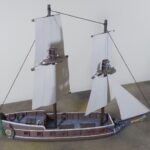
Braunsteins and Kriegspiels share a lot of DNA, even though the first is thought of as an ancestor of RPGs and the other as a strict wargame. The overlap between them can be seen in the structure and adjudication.
1. Referee-led order implementation
2. “Fog of war”
3. The potential for non-zero-sum victory conditions
4. Multiple competing factions
5. A “sandbox” environment
6. Real-time or time-based progression
7. Rules as tools, with scope for actions not strictly codified by rules
In both systems, rules exist to support the referee and provide a consistent framework for player expectations.
These days the two activities are generally viewed as as distinct at worst and as two sides of the same gamecoin at best.
But there are games that comfortably bridge the gap, presenting the best of both worlds. And I’m not talking about games that dip their toes in with half measures. Yes, I’m looking at you, Mister Stars Without Number.
No, I’m talking about tabletop games that blend Braunstein narrative and roleplay with Kriegsspiel military strategy and maneuver. Chainmail and OD&D basically invented and perfected the genre right out of the gate has been analyzed to death, and yes Gangbusters and Boot Hill, we all know about those. How about we look for games in that same mold that weren’t written by the G-Man and his cronies?
After an exhaustive search and careful process of winnowing down to the rarest of gems, I have found one that fits the bill
Full disclosure: I have not played this, but Fluid the Druid has, and based on his word and the most stringent analyses known to man, it sits pretty high on my bucket list. (It is behind only those games and books that my fellow Bros have pumped out.)
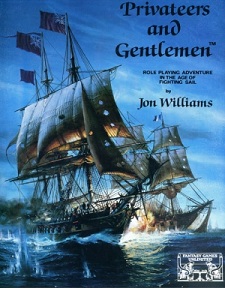
Privateers and Gentlemen
Billed as RPG, this one is set in the Age of Sail and explicitly merges character roleplaying with ship-to-ship tactical combat and naval command. The PCs can be officers in the Royal Navy, Privateers, merchants, port officials, or the titular gentlemen with more social leverage than military clout. PCs have to balance personal goals (narrative) and negotiate national interest against personal profit, prize courts, admiralty politics, and the limits of letters of marque. It eschews the RPG standard of party structure, instead encouraging players alternate between alliances and betrayal and outright hostility. It still utilizes a referee, who presents zero-sum scenarios and takes orders and resolves conflicts that players can’t.
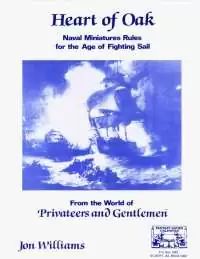 This Braunstein style of play can lead to duels in the streets up to large fleet actions played on the table. It is an older game, but the code checks out. I’ve played the tactical game (Hearts of Oak) on my channel, and P&G promises to provide the right Braunstein structure to make the tabletop games more relevant and impactful over time.
And Jon Williams wrote it in the early 1980s. We all know why narrative play won the hearts and souls and limited brains of modern RPG players, but looking back one has to wonder how much more interesting the hobby would be if P&G had found a stronger hold on things. What might have developed over the last 40+ years if the Smarter Than You set hadn’t been chasing the tails trying to reinvent D&D and huffing their own farts the whole time.
I can’t wait to give it a try, but don’t worry – we’ll finish up the Ginion Chronicles first