
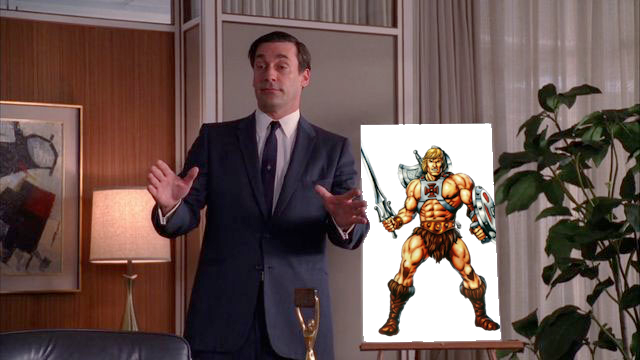
The new Masters of the Universe movie might not be a good movie, but it is a great He-Man movie. In a stunning twist, the studio gave this movie to people who like the IP and wanted to do it justice rather than hollow it out and use it as a vessel for another story and yes, I’m looking at you, Witcher and God of War.
Hollywood finally remembered that strength is not the enemy of virtue. Strength is the raw material of heroism. But like any raw material, it must be shaped, guided, and ordered toward the good. Contrary to what many of the not-as-clever-as-they-think-they-are class, this is not a new idea nor is it “modern take on healthy masculinity.” It’s one of the oldest moral truths in the Western imagination and a core tenet of Christian philosophy, and it’s refreshing to see as the core message of a tentpole popcorn flick.
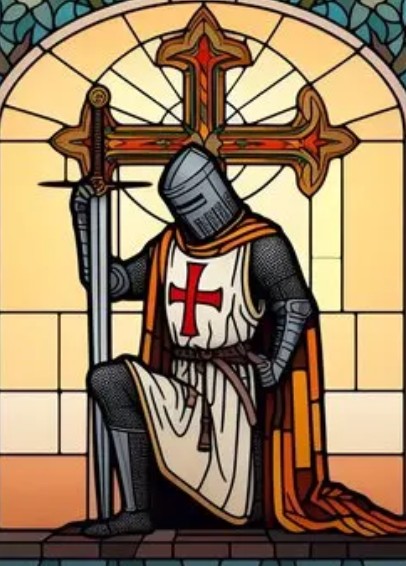 To really understand why this movie works, we have to go back to the roots of the barbarian hero himself. Before He‑Man, before Thundarr, before every toy aisle muscle‑mountain with a magic weapon, there was Conan. Robert E. Howard’s Cimmerian was a pagan hero written by a Christian-raised Texan, and that tension shaped the entire genre. Conan may be a pirate, a rogue, a mercenary, and a killer, but he’s also loyal, courageous, and bound by a rough-hewn code of honor. As better cultural commentators than me have pointed out.
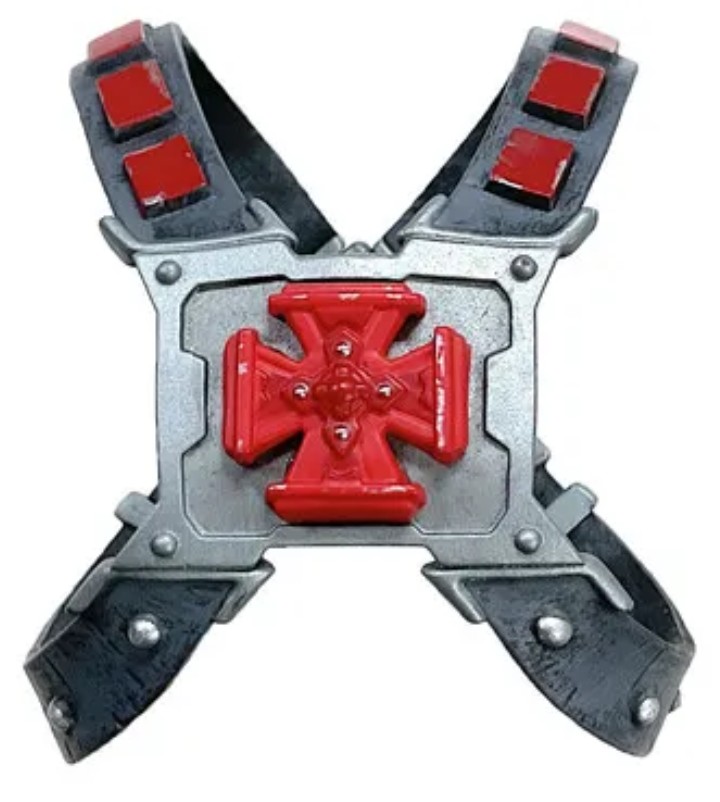 Decades after hither came Conan, Thundarr the Barbarian refined the idea for Saturday morning. He kept the muscles and the sword, but traded Conan’s amoral pragmatism for a straightforward, almost boy-scout sense of justice. He was the barbarian as protector, a wandering knight in a post‑apocalyptic wasteland, and he shared Conan’s implicit Christian moral outlook – dialled up to 11 in order to appease network censors and the parents of its primary audience. And then came He‑Man: the barbarian hero fully moralized, fully domesticated, fully aligned with the Christian knightly tradition of strength in service to others.
The new movie understands this lineage and fully embraces it.
The film articulates the idea that strength is not heroic in itself. What matters is how strength is used – whether it is ordered toward the protection of the weak, the defense of the innocent, and the pursuit of the good, the beautiful, and the true. This is the same moral architecture that undergirds The Lord of the Rings, another fantasy realm built on a Christian foundation without ever naming it.
Tolkien famously said that The Lord of the Rings is “a fundamentally religious and Catholic work,” not because Middle‑earth has churches or priests, but because its moral logic is Christian. Power is dangerous unless governed by humility. Pride is the root of evil. Mercy has supernatural consequences. The smallest person can bear the greatest burden. These are not pagan virtues. They are Christian virtues expressed through myth.
Masters of the Universe taps into that rich vein of Western culture. Prince Adam’s (nee: Adam Glenn’s) journey isn’t about becoming strong – he already is strong even if nobody around him seems to notice how jacked the guy is. He thinks the journey is about obtaining power, out of a desire to become the kind of man that he mistakenly believes his father wanted him to become. As is so often the case, he learns that a deeper truth lies behind the object of his desire, and it is not until he embraces that deeper truth that he comes into his own.
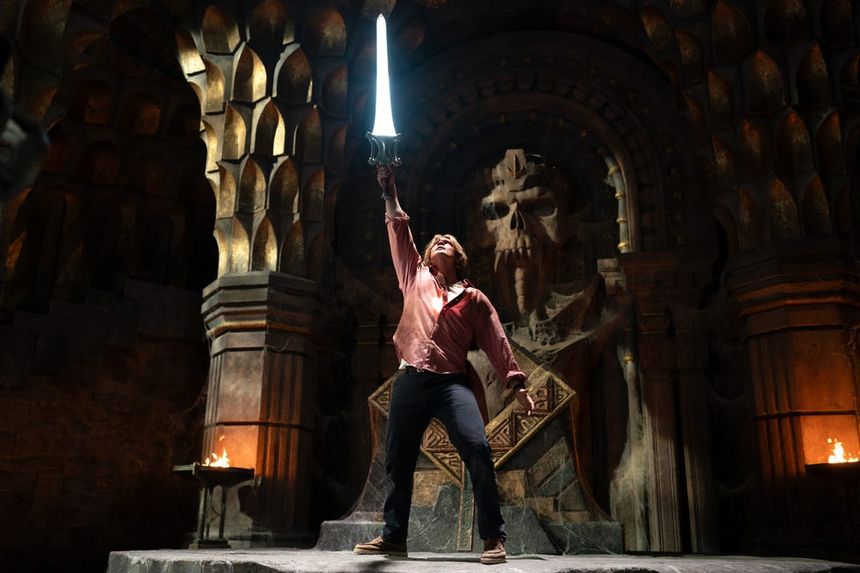
This is why the movie feels so refreshing. Instead of inverting the Christian message, it is a skinsuit draped over the Christian message. It speaks the same moral language that shaped Conan, Thundarr, He‑Man, and Tolkien’s heroes long before modern analysts coined the phrase “healthy masculinity.”
In an age when Hollywood often treats male strength as something to be apologized for or deconstructed, Masters of the Universe dares to say what every boy in 1981 already knew: strength is good when it is used for good. That is neither toxic nor outdated. It is a universal truth and part of the Natural Law of God’s creation, and it resonates so deeply with every man that it forms a core foundation of every heroic tradition from Beowulf to Aragorn to Eternia’s champion.
That’s why this movie works. Yeah, it’s fun, it’s loud, it’s colorful, and it honors the source material as much as any film can these days. Ten year old me would have loved it for all that. Fifty year old me loves it for the same reason, but mostly because the fun, noise, and color are – like He-Man’s strength itself, rightly ordered. Beneath the spectacle beats a moral heart shaped by the same tradition that gave us the greatest heroes in Western storytelling. It may not be Christian in name, but it is Christian in spirit. It’s a reminder that power is a gift, courage is a duty, and heroism is the harmony of the two.
A modern audience may call that “healthy masculinity.”
Older generations would simply call it Christian virtue.