

Confusion on the social media! Shock! Gasp! A normie wandered into a Real D&D discussion to inform people who know more than they do that one simply MUST have social mechanics in one’s RPG because social events happen. In the context of the childless weirdo gaming deserts, perhaps, but in the fertile jungles of BROSR play the campaign is built on player skill and not character skill. If you want to run a silver-tongued diplomat, you need to be able to talk like one yourself. In much the same way that if you want to run a cunning battlefield commander, you need to be cunning yourself.
That led me to thinking about what I’ve observed over the last few years of AARs. This is also, despite being cobbled together from old concepts in isolation, still a very young hobby. The boys have been so busy building, stress-testing, and refining the mechanics of the Braunstein campaign that they haven’t had time to step back and do a meta-analysis of playstyles. That’s what I’m here for. And take none of this as criticism. The players are the men in the arena. I’m just the guy in the booth trying to make sense of the game, and understand it well enough to explain it to the viewers’ wives.
Anyway, one of the great joys of the Braunstein, live or AAR, is watching the personalities bounce off each other like billiard balls. Watch enough of them and you start to notice trends. I’ve identified eight play styles, but those who have spent more time in the arena could probably identify a few that I’ve missed as an analyst watching from the stands. Go ahead, tell me I’m wrong.
The Empath is the player who walks into the room and immediately starts checking the emotional temperature. They’re the first to notice when someone’s frustrated, the first to smooth over a misunderstanding, and the last to raise their voice. In a Braunstein, that’s a superpower. They build alliances effortlessly and keep them together long after more abrasive personalities would have blown things up.
But the Empath’s Achilles heel is simple: they want everyone to be happy. And in a competitive political wargame, that’s a dangerous instinct. (It’s also probably why I hide behind the six hour time different excuse to avoid play, but this post isn’t about me.) The Empath who learns to say “no” becomes a kingmaker. The one who can’t becomes a doormat.
The Schemer is already plotting before the briefing is finished. They whisper in corners, pass notes, and smile like a cat who knows where the canary is buried. The Schemer thrives on asymmetric information and loves nothing more than turning two other players against each other while they quietly collect the spoils.
When they win, they win big. When they lose, it’s usually because they got caught weaving one too many webs. High‑risk, high‑reward, and always entertaining.
The Commander 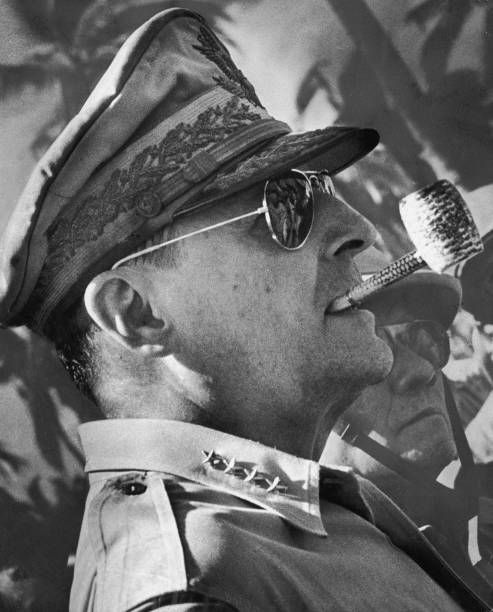 treats the Braunstein like a battlefield, even when it’s a city council meeting. Direct. Decisive. Action‑oriented. They’re happiest when they’ve got troops to move, resources to marshal, and enemies to crush. They don’t always understand the subtleties of diplomacy, but they don’t need to – their clarity of purpose attracts allies who appreciate someone willing to actually do something.
Their weakness is predictability. A clever opponent can bait them into fights they don’t need. But give them a clear objective and a few loyal allies, and they’re a force of nature.
The Opportunist doesn’t commit early. They watch. They wait. They listen. And when the moment comes – when two factions are locked in a death struggle, or when a key resource is left unguarded – they strike like a hawk. The Opportunist rarely leads, but they often finish.
They tend to do well in the short term, and suffer over long-term play as they build a reputation for unreliability. People don’t like allying with someone who might vanish the moment a better offer appears. But in a chaotic Braunstein, flexibility is often the winning trait.
The Analyst is the one with a notebook, a flowchart, and a plan. They understand incentives better than anyone else at the table. They can tell you which faction benefits from which outcome, who’s bluffing, and who’s overextended. They’re the quiet backbone of many winning coalitions. But analysis paralysis is real. When the room gets loud and the deals start flying, the Analyst can get left behind. They shine in structured environments and struggle in pure social free‑for‑alls.
The Charmer Is one of those guys that just has presence. He walks into the room and suddenly everyone wants to hear what he thinks. The Charmer doesn’t need leverage – he is leverage. They can talk their way out of disasters and into alliances they have no business being part of.
Their downfall is overconfidence. Charm opens doors, but it doesn’t keep them open. Eventually, you have to deliver.
 The Turtle is much maligned by Bdubs, but he has his place. Slow. Steady. Cautious. He doesn’t take big risks, doesn’t make big promises, and doesn’t get caught in big scandals. He builds a solid position and waits for everyone else to self‑destruct. In a Braunstein, that happens more often than you’d think. The Turtle rarely wins spectacularly, but often plays kingmaker, and they win more often than the table gives them credit for.
The Chaos Agent. Every Braunstein has one, and he’s usually named DunderMoose. They aren’t really here to win — they’re here to play. They make unpredictable moves, form bizarre alliances, and occasionally topple the entire scenario with one well‑timed act of lunacy. They’re the spice in the stew.
They almost never win, but they make sure everyone remembers the game.
Final Thoughts
These aren’t iron-clad, and players can often shift from one type to another depending on the game and the succession of events. A Turtle whose position has failed can turn into a Chaos Agent pretty darn quick, and a Commander whose forces are decimated can turn Charmer to try and salvage a tie from his predicament.
Braunsteins, whether one-offs like Godsteins or Total Nonstops, are a rarity in the distinctly social hobby of TTRPGs. They are about people – their instincts, ambitions, blind spots, and brilliance. Every one of these archetypes brings something valuable to the table. The trick is knowing who you are, who you’re dealing with, and how to turn your natural tendencies into strategic advantages.
Because in a Braunstein, personality is the game.