
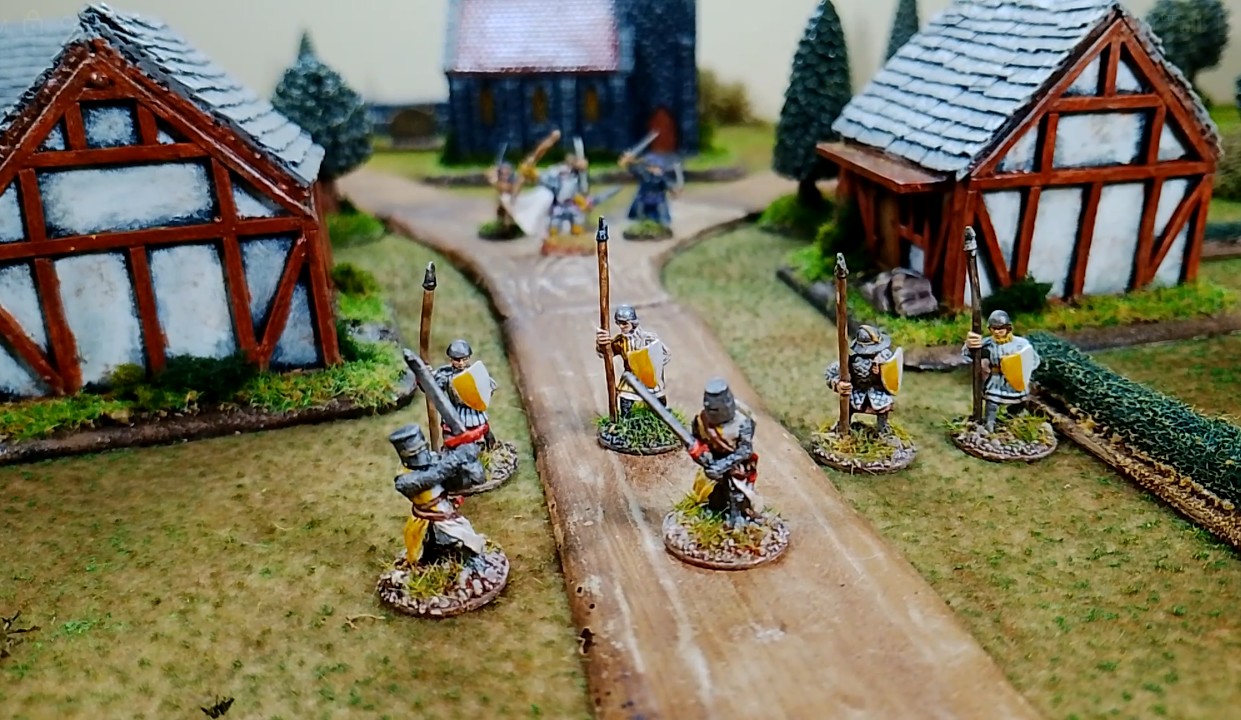
Two systems, one game.
With as much ink has been spilled over the granddaddy of them all, Chainmail, it’s surprising how little genuine analysis has been produced. 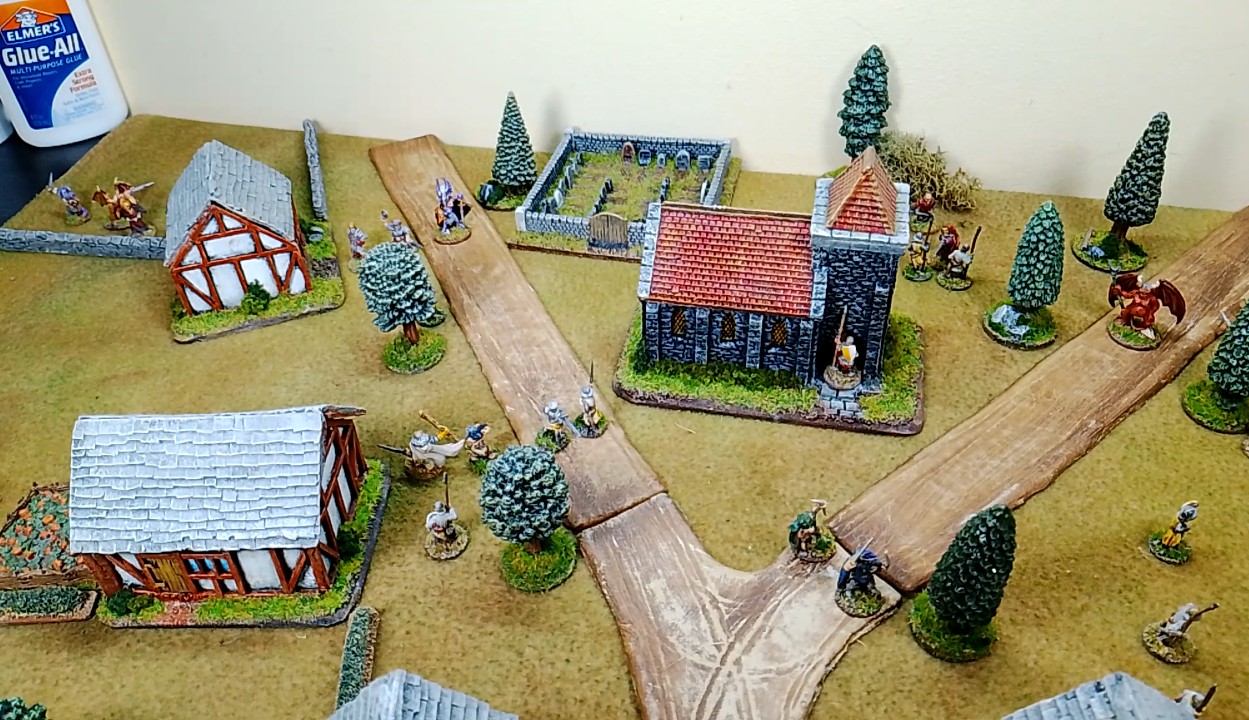
In the game show here, the Red Cult is attempting to steal a relic, the Sacred Skull of Saint Featherstone, from the village of Bathton. Both forces have a mix of regular troopers with hand weapons, in a mix of leather armor, plate mail, and shields. They also have a mix of heroes (or antiheroes), ogres, and wizards. As a result, the scenario features a mix of different combat styles. Three, to be precise:
- When a fantastic creature such as an ogre or a hero meets a regular trooper, it wins the combat automatically. The only thing regular troops can hope to do is slow the opposition.
- When regular troops meet regular troops, the rules are very clear on what happens. Who attacks first, what you need to roll to eliminate the figure, all of these are cut and dried.
- Things get a little more complicated when fantastic creatures meet fantastic creatures, and that’s what I want to talk about today.
Some of the obvious questions have obvious answers. Who attacks first comes down to which side has the initiative. You don’t have to think about weapon length, who charged, and whether one side gets multiple attacks or not.
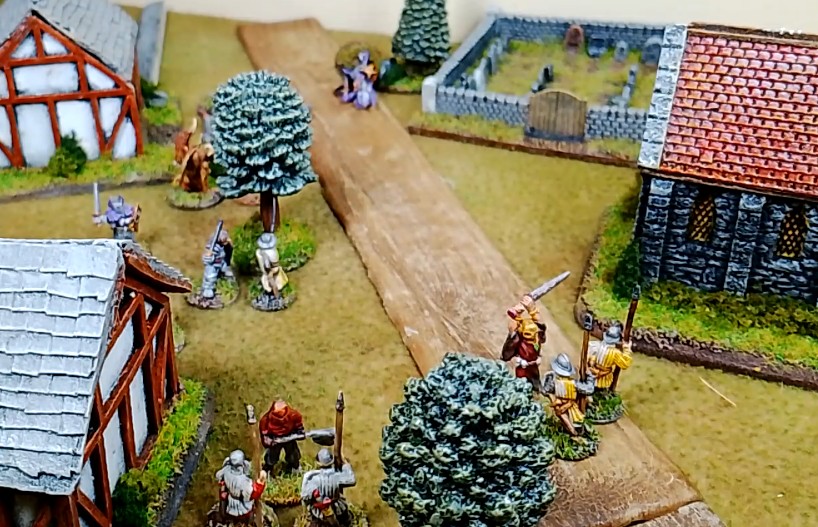
But there is a little bit of a mental hurdle that you have to get over. On my table, I had a barbarian in a link cloth and wielding a two-headed sword charging to combat against an anti-hero in full plate mail, shield, and longsword. This looks exactly like two troopers fighting, but you use an entirely different system.
Weapon speed doesn’t matter, armor type doesn’t matter, the only thing matters is that you have a hero fighting a hero. That two hit score here is a seven, regardless of weapons and armor. The what you see is NOT what you get, because of the classification of a figure as a hero overrides such mundane concerns as what the hero is holding. Conan is an indomitable hero no matter what weapon he happens to hold at the moment. Aragorn will mow down nameless orcs like wheat before a scythe and he’ll do it using a size or any other garden implement you care to name.
Likewise, wizards our combat monsters without the armor restrictions and weapon restrictions that would come later. How is this old guy with the staff and a sword capable of going toe to toe with an ogre, is the natural question. The answer lies in the source material. No self-respecting wizard steps onto a wargaming table without first cladding himself in half a dozen magic protections. He will spice up his weapons with simple charms, and this is reflected in how easy it is for him to hit fantastic creatures and how hard it is for them to hit back.
When put into practice, these two combat matrices are very charming, and very fast. It’s the same system in two different dialects. And once you get a rolling, these games just fly by. In my cult attack, the village was formed on three sides, and after beating back a diversionary attack on one front, the defenders were able to race to reinforce the others.
Full disclosure: I didn’t use fatigue, and that might have had a salutary effect on the defenders. The one-on-one system inherits all the rules of the mass combat game, and with 30 to 40 figures on the table, the fatigue system was a bridge too far for my limited cognitive load.
It was still a hell of a great time though, and it really shed some light on what Gary was thinking when he designed the AD&D combat system. I highly recommend everyone try it once or twice in their gaming career.