

Ever since the OGL dropped, two full and several partial editions ago, the Dungeons & Dragons creator scene looked like a new American dream. The OSR copypasta let anyone with the capacity to “print to PDF” throw a title into the market, and the advent of 5e opened the door for any rando with a webcam repackage the same dozen talking points into the YouTubes. Validate the masses, reassure them often enough of what special boys they are, and with a little time and patience you had a good chance of suckering enough people to quit your day job.
But lately, the lights are going out. Big channels are slowing, if not shutting, down while others are pivoting so hard you can hear the tires squeal. The guys with one finger checking the wind are reporting – while never quite admitting – that the gravy train has been derailed.
The D&D explosion from 2018 to 2022 (and to lesser extent as presaged in the early teens) was a cultural anomaly. Critical Role turned gaming into performance art. Stranger Things made the game nostalgic. The pandemic trapped millions indoors and pushed them toward online play. For a brief moment, D&D wasn’t just a niche game; it was a recognizable lifestyle brand.
And where there’s a lifestyle brand, there are, to use the modern and more polite word for grifter, the influencers.
They built channels on WotC land, while it was cheap and popular.
Then came the OGL fiasco. Wizards of the Coast slightly tightened its grip on their ecosystem, and the community revolted, splintered, and/or lost interest.
That hurt, but it was coupled with a quiet shift in YouTube’s algorithm, a deeper wound by far. The platform stopped favoring long‑form niche content. It wanted shorts, retention, and mass appeal. Overnight, a 20‑minute video about encounter design became digital dead weight. Channels that once pulled in hundreds of thousands of views struggled to break five digits.
This is why you see creators like Taking20 vanish, XP to Level 3 slow down, Web DM diversify, and DM Lair post a video titled “I’m done.” [Editor’s note: I’m deliberately not linking to any of these bozos. My man Bradford C. Walker is a better man than I in this regard, Gunga Din.] Not because they stopped loving the game, but because they lost the benefit of the invisible hand of the popcult and the YT thumb on the scale that they always denied existed. Once they had to rely on their own creativity and marketing skills, the numbers stopped adding up.
If you look closely, you’ll notice a trend in the new direction these “creatives” are headed:
DM Lair is launching No Quarter.
Dungeon Dudes are expanding Drakkenheim.
Matt Colville is building his own RPG.
Kobold Press is pushing Tales of the Valiant.
Shadowdark proved you can run a million‑dollar Kickstarter without WotC’s blessing.
Did you notice that these new projects look suspiciously like the one they just abandoned?
They’re doing exactly what Wizards of the Coast is doing, just under smaller banners. Having realized they aren’t welcome in the garden of the wizards anymore, they’ve decided to build walled gardens of their own. They may have escaped the plantation, but they haven’t escaped the plantation mindset. They just want to be the guy holding the whip. And given the mainstream gamers’ willingness to trade just about anything for a few crumbs of validation, they’ll find a few takers.
It’s going to be considerably more difficult this time around in part because the D&D boom brought in millions of new players who needed beginner content. They devoured DM tips, rules explainers, and “how to play” guides. With a few years of bad advice under their belt, the audience doesn’t need as much hand‑holding anymore. They are looking for deeper play, stronger culture, and systems that don’t feel like they were designed by committee.
And you’re not going to find any of those under the boutique corporate banner.
The real creative energy in tabletop gaming isn’t coming from WotC or the YouTube personalities. It’s coming from the BROSR.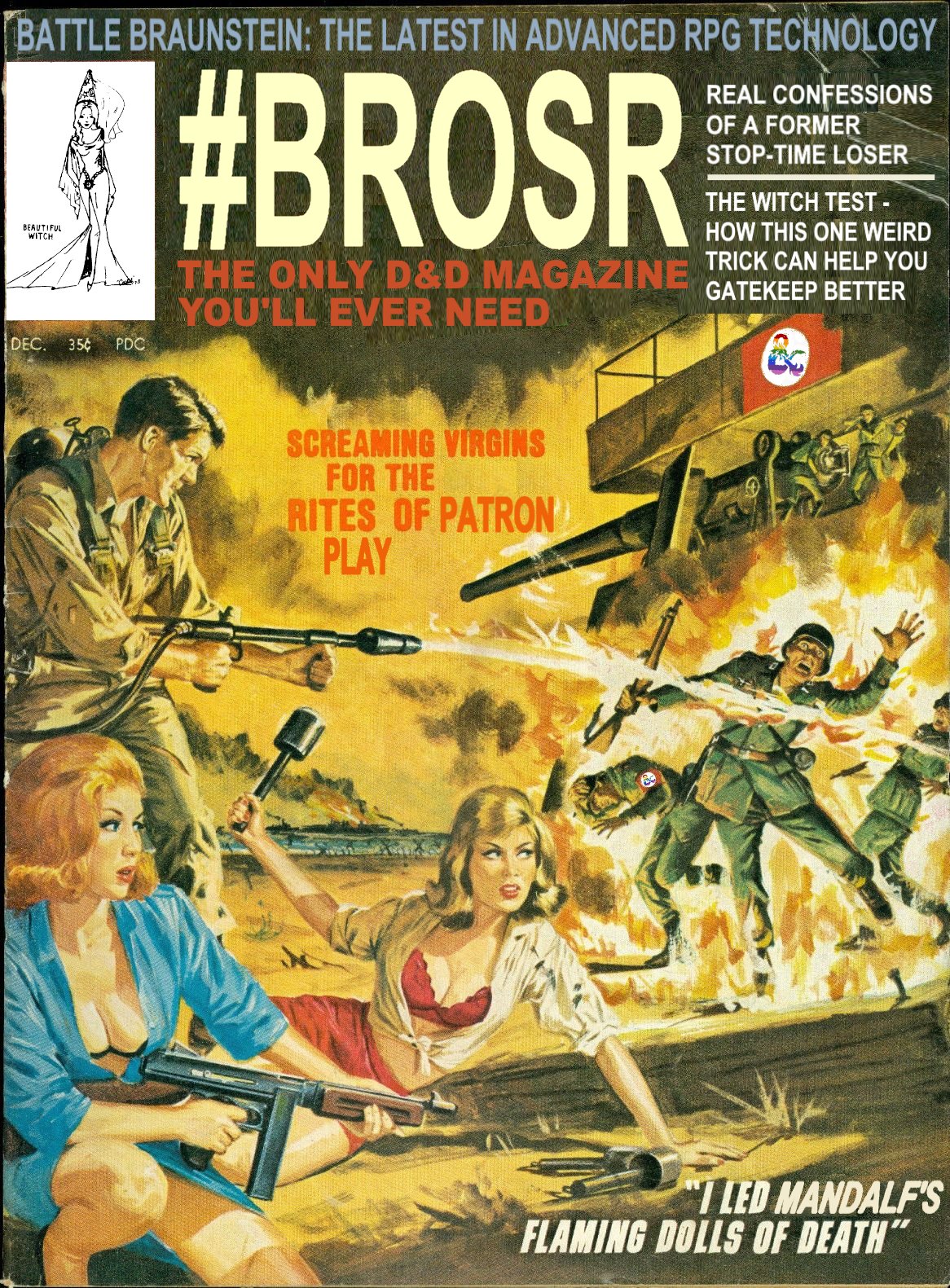
While the big creators chase dollars, and WotC chases subscriptions, the BROSR is doing something radical:
They’re creating out of generosity, not desperation.
They’re building culture, not product lines.
They’re innovating in play, not packaging.
They’re trying to become the next Gygax, not the next WotC.
And they’re doing it the same way Gary did it:
- at the table
- with friends
- through actual play
- with no corporate oversight
- with no algorithm to appease
- on a cultural foundation that is solidly and unapologetically Christian
The BROSR is proving the future of tabletop gaming doesn’t belong to the nerds with the biggest budgets or the most help from the algorithm. It belongs to the people with the strongest brotherhood, and the most generous spirit.
So yes, the D&D creator economy is collapsing, and yes, this is a very good thing. Because in the middle of all this chaos, the BROSR is quietly building the next era of tabletop gaming, one session at a time, one campaign at a time, one generous act of creativity at a time.