
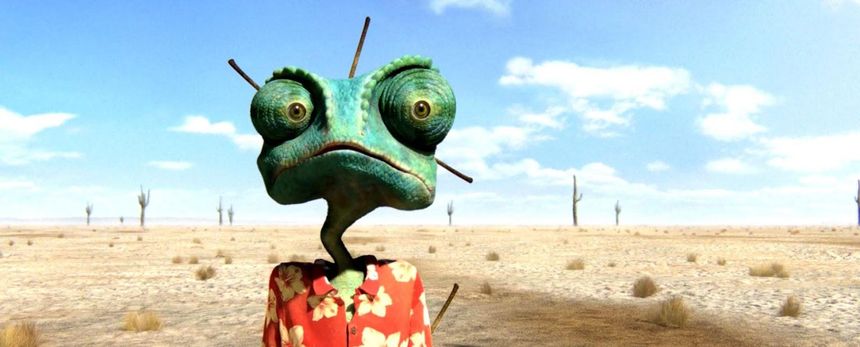
Bear with me, game frens. This is going somewhere.
My kids got bored with kids’ movies early, and honestly, I get it. Hollywood leans hard on the same lazy character arc: the external threat can’t be overcome until the hero banishes his internal demons. You just believe in yourself. That’s the message. Evil is only really within you, and confidence is treated like a magic spell that solves every problem. It’s subtle, and unchristian, like Hollywood itself.
But Rango breaks that pattern.
Rango homself doesn’t start the movie lacking confidence. Quite the opposite. He’s theatrical, overconfident, and perfectly comfortable improvising grandiose personas to an audience of plastic toys. When an accident pushes him into the town of Dirt, he doesn’t hesitate. He invents a heroic identity on the spot.
The twist is that Rango doesn’t need more self‑belief. He already has plenty. The problem is that the “self” he believes in is fake. His confidence is hollow, and when the town actually needs a hero, that persona collapses.
Self‑belief is meaningless if the self you believe in isn’t real.
Rango’s turning point comes when he meets the Spirit of the West, the film’s mythic mentor figure. And he delivers the thesis of the entire movie in one line:
“No man can walk out on his own story.”
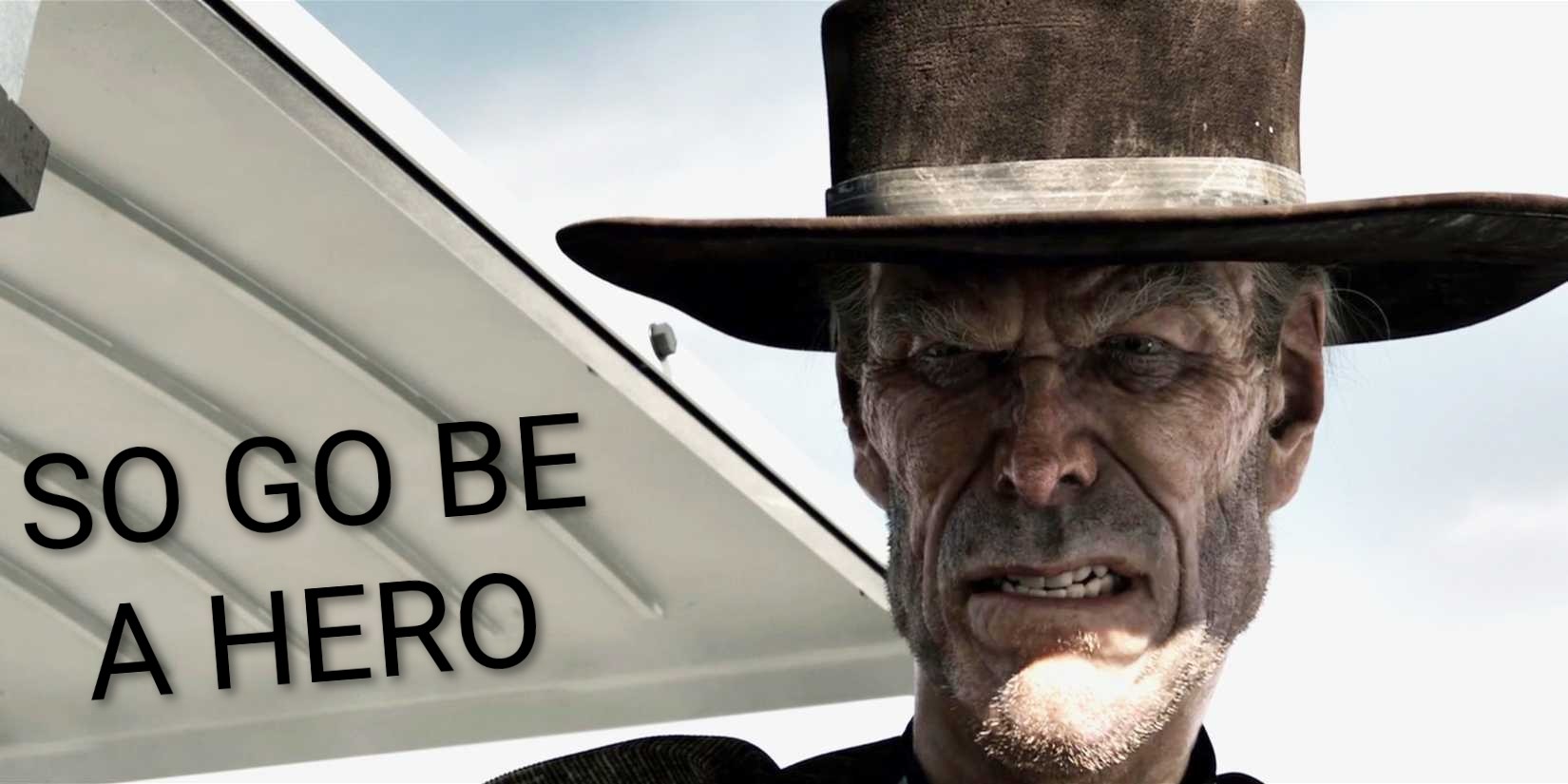
Identity isn’t unlocked by confidence. It’s built through responsibility, honesty, and action. That’s a far more mature message than “trust yourself.”
Notice that Rango starts with a flashy backstory he made up – and it’s worthless. He only becomes someone real when he acts.
That’s exactly how RPGs work best:
- Characters begin as sketches
- Identity forms through choices
- Reputation is earned, not written
In an RPG, your character becomes who they are through play.
As a brief aside: The town of Dirt is a perfect Braunstein environment: a living, reactive community full of factions and tensions. It isn’t built around Rango. He just wanders into it, and the world changes based on what he does. That’s the essence of open‑table, emergent play.
Anyway, the Spirit of the West, like a BROSR GM, doesn’t hand Rango a destiny. He hands him a principle: your choices matter. Rango chooses to act the hero, and that’s what makes him one. Even if he had died in the final confrontation with Rattlesnake Jake, his identity wouldn’t change. He would still be a hero, and remembered as one for the choices he made and the fights he fought. It’s not the outcome that matters, it’s the choices. As C. S. Lewis put it, “What you do is what you are.”
That inversion make Rango a modern day masterpiece, and it can make your campaign a masterpiece, if you let it.
Rango teaches the same lesson the BROSR teaches: don’t hide behind a fantasy version of your character. Don’t rely on confidence or backstory. Instead, make bold choices, take risks, accept consequences, and let identity emerge from play.
That’s the magic that makes Real RPGs work, and the heart of Rango’s story.
Crazy, right?