

In my last post we looked at how the erstwhile “children’s movie” Rango provides lessons that can directly improve your experience at the RPG table. Today, let’s look at a slightly more highbrow work of art.
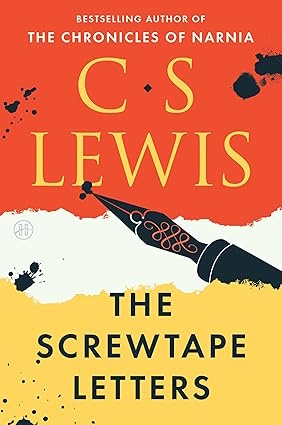 C.S. Lewis’s The Screwtape Letters is the second best supplement for RPGs, second only to the bible, because its satirical masterclass on how evil manipulates the human mind is a direct challenge to Rule Zero.
Rule Zero is a sacred cow, a golden calf if you will, of modern tabletop design that tells players, “the Game Master can change any rule at any time.” It’s sold as flexibility, creativity, freedom. It seems reasonable if you don’t think about it too deepl, but if you scratch the surface you’ll find it’s a thin patina over something much darker. If C. S. Lewis’s Screwtape were writing a gaming manual, Rule Zero would be the first commandment.
Why? Because Rule Zero trains players to stop thinking.
Lewis understood that evil doesn’t need to break your will; it only needs to keep you from using it. Screwtape’s entire strategy is to keep the Patient drifting, unreflective, passive. Rule Zero cultivates that same mental fog at the gaming table.
When the GM’s whim overrides the written rules, the rules stop being a system to engage with and become a set of suggestions that might matter or might not, depending on the GM’s mood. Players learn quickly that deep understanding is wasted effort. Why study the mechanics when the GM can nullify them with a shrug? Why plan a clever strategy when the GM can “adjust” the encounter on the fly? Why worry about how the dice land when the GM can override them at any time? Why question inconsistencies when the answer is always the same: “Because I said so.”
It’s a kind of mental conditioning.

And conditioning is Screwtape’s favorite tactic. He doesn’t tempt with grand sins; he tempts with plausible lies. The kind that sound selfless and virtuous and that let you feel righteous while doing something wrong. Rule Zero is full of these lies. “I’m fudging dice to make the story better.” “I’m overriding the rules to keep things fun.” “I’m railroading them for their own good.”
Every tyrant in history has used the same excuses.
Lewis would laugh, or wince, at how easily gamers swallow this bait.
Rule Zero doesn’t just erode player agency; it erodes player reason. It replaces clear expectations with emotional guesswork. It shifts the game from a shared framework to a personality cult. The players stop engaging the world and start engaging the GM. They stop thinking about what their characters can do and start thinking about what the GM will allow. They stop participating and start waiting.
This is the quiet victory Screwtape dreams of: a table full of people who have surrendered their intellectual engagement without ever noticing they did it. Reason is a gift God intends humans to use, and Screwtape warns Wormwood never to let the Patient think too deeply, because reason tends to lead him back toward God.
Lewis reminds us that reason is part of the divine image, a tool meant to guide humans toward truth. Screwtape wants to replace that with emotional excess, distorted logic, shallow thinking, and a fixation on the immediate physical world.
 This is why Screwtape’s first and most urgent command is: “Do anything — anything — but let him think.”
In this manner the proponents of Rule Zero are making true the warnings from the 1980s crackpots who argued that D&D is satanic. Those crackpots lacked the fifty years of deep analysis of RPGs that your humble host possesses and were operating under ulterior motives of their own, but their hearts and spirits have proven to be in the right place. It is interesting to note that the industrial-game complex and the blue-haired fatties who have commandeered the industry in service of Screwtape and his peers agree with the 1980s crackpots – they just think it’s a feature of them rather than a bug.
Because it turns out that RPGs are a tool, and like any tool one that can be used for good or evil. They create habits in those who play them, and reinforce those habits through repetition.
A role-playing game, rightly ordered and infused with a need for reason, humility, and accountability, “will inevitably lead a person to God and Christian conduct,” Anyone who thinks critically about reality (of which RPGs are a part) will come to understand the truth of Christianity. So Hell must divert humans toward emotion or false reasoning, and Rule Zero is a big part of how it does that.
Screwtape wants Rule Zero. You shouldn’t.