
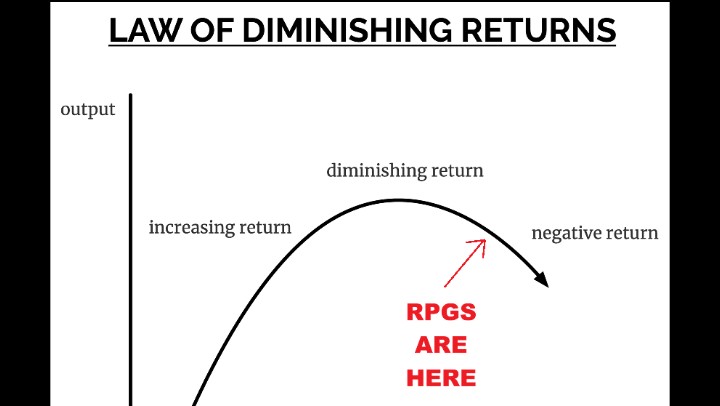
The tabletop RPG hobby is going through one of its regular periods of fractionalization. These happen roughly every decade, so no big deal.
You can judge the impending implosion of D&D as a brand by the way the OSR rats are abandoning ship and scrabbling to position themselves and their games as the next center of gravity for the hobby. To lend credibility to their sales pitch they’ll claim that repackaged mechanics and Temu degenerate artwork count as innovation, but being so limited in their approach they can only speak on mechanics. They nibble around the margins with things like experience systems, domain management, elegant logistic management systems, maybe another stab at faction turns or a call for more dynamic maps, without question any of their a prioris.
Those can be worthwhile developments, of incorporated into a larger analysis, but little tweaks to subsystems are not where the most important advances are actually occurring.
Most of the ideas that I see bandied about the digital water cooler as cutting-edge are just re-hashes of ideas first implemented in the earliest years of the hobby. Persistent worlds, faction politics, logistics, strategic decision-making, and player-driven narratives were a big part of the first RPG. I refer, of course, to Duane Jenkin’s “Brownstone” campaign, which pre-dates Arneson’s later Blackmoor campaign by at least two months. Taking David Wesley’s one-shots to the next level, Duane and his imitators in the Twin Cities gaming community pioneered campaign structures in which multiple players pursued independent goals within a living world that continued to evolve between sessions.
The influencer class recognizes that it’s no longer enough to noodle around the margins of conventional play. Their flagship is sinking beneath the weight of the woke parasites and beginning to cannibalize itself. Which forces the influencers to chart their own course outside of the Corporate Hobby, but still within the confines of the same rigid GM-player-narrative structure. More and more, they look to incorporate abandonware mechanics into conventional play, but they can’t think outside of their books and their forty years of momentum. It takes a whole-subject approach, and they just aren’t capable of that.
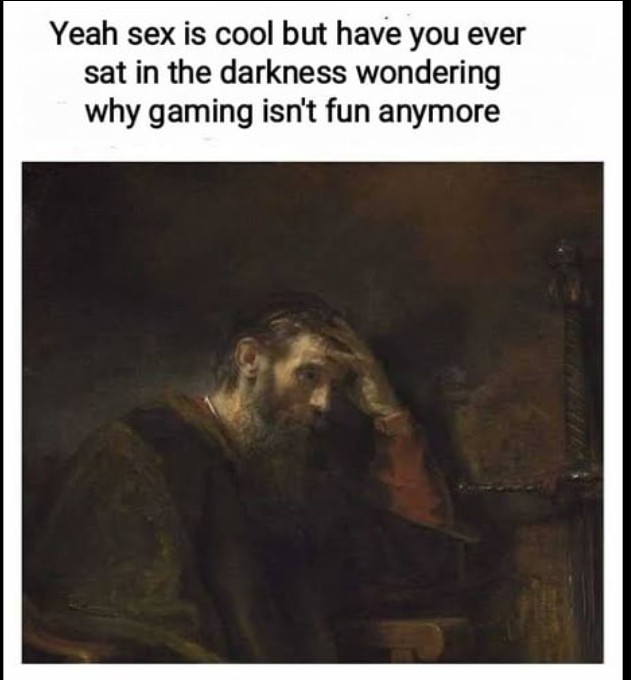
The challenge before hobbyists today is not discovering or even implementing Braunstein concepts. The BROSR has already done that. The challenge is SCALING Braunstein concepts.
Historically, campaign organizers were limited by the communications tools available to them. Players met at conventions, club meetings, or scheduled game nights. Information traveled by telephone, snail mail, newsletters, and word of mouth. Even highly ambitious campaigns were constrained by the practical realities of keeping everyone informed and engaged.
Modern technology changes that equation.
Platforms such as Discord, social media, shared databases, and collaborative online tools allow campaigns to operate continuously rather than episodically. Diplomacy can occur every day instead of only during game sessions. Intelligence gathering, trade negotiations, recruitment, political maneuvering, and strategic planning can all take place asynchronously between battles.
In this model, the tabletop battle is no longer the campaign itself. It becomes one method of resolving conflicts generated by a larger and constantly evolving game world.
This shift creates possibilities that previous generations of campaign organizers could only partially realize. A campaign no longer needs to revolve around a single referee and a small group of players. Multiple referees can oversee different regions. Independent groups can run games in separate locations while contributing to a shared world state. Events in one theater can influence conditions in another. Information can remain imperfect, localized, and player-driven.
The result is a many-to-many campaign structure rather than the traditional one-to-many model.
This may be the most significant development occurring in campaign gaming today. Not because the underlying concepts are new, but because the organizational barriers that once limited them have been dramatically reduced.
Yet this kind of innovation presents a problem for commercial publishers.
A company can sell campaign books filled with advancement rules, territory systems, and resource mechanics. Those products fit neatly into the traditional model of game publishing. What is much harder to claim to have invented, then package and sell to the rubes, are the social procedures that make a persistent campaign world function. Especially for materialists who aren’t trained to understand the social and spiritual dimensions of the hobby.
Successful large-scale campaigns depend less on formal mechanics and more on community practices. They require active participants, trusted referees, clear communication channels, and shared expectations. Their success depends as much on organization and culture as on game design. To their unending frustration, the merchants cannot bottle brotherhood and sell it to the community as their own unique contribution.
For that reason, some of the most important experimentation is occurring outside traditional publishing. At least one community – hello, BROSR! – is developing new methods for coordinating players, managing information, adjudicating actions, and maintaining continuity across multiple tables and multiple locations.
The frontiers of campaign gaming are not just another set of rules, at least not in the conventional sense of a book that contains the rules the players have collectively decided to ignore. The real treasure is literally the friends we make along the way, but we’ll only find them if we can discover scalable procedures that allow scores of players to participate in a shared persistent world while preserving the sense that individual decisions still matter.
This is a return to the original vision of campaign gaming, but with the added challenge of pushing the limits of that vision by scaling it up to games the likes of which earlier generations could only imagine.