
Imperial Commander, written by Richard Halliwell and Bryan Ansell and published way back in 1981, has an undeserved reputation as a clunky old dinosaur that’s not worth the effort to get onto the table.
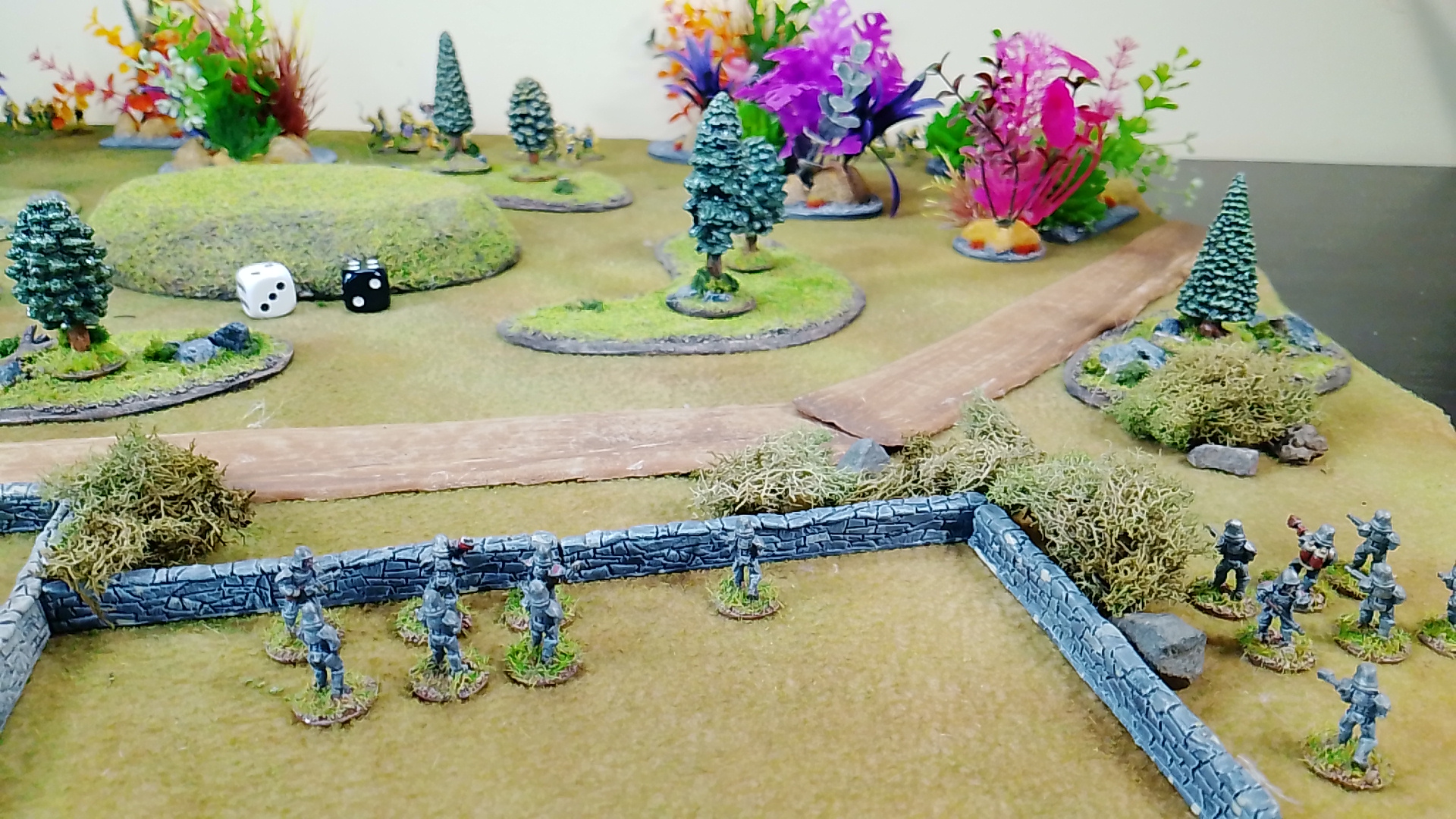
I say undeserved, because it plays fast. Really fast. In part because it’s so deadly and in part because there isn’t that much to it.
The turn order is sort of IGOUGO. On my activation I move everybody, then we both shoot with all of our figures, then I take a second move action. If any of my figures are within 5cm of yours we do a little melee mini-game that involves some shooting, some moving about, and some roll-offs for actual melee.
The move-shoot-move system provides for a lot of….well, movement. Figures fly across the table until they find a decent camping spot, and can even engage in shoot and scoot tactics, which motivate their opponents to find flanking attacks and make ample use of suppression. It’s very tactical, and being able to pick your ground really helps balance the fragility of the lighter troops. They can get to strong points, or hide in cover, which they need to do if they want to last more than a turn or two.
Melee combat is a simple 2d6 roll off, but the press of bodies turns squad-based fights into a bit of a confused mess in a good way. The active player can have figures stand and blast away with pistols, or get stuck into base contact, but each figure has to roll a 5+ on a d6 to act. If he succeeds on that roll, he can act and then keep rolling to act again until he fails or dies. Given that most squads will have around 6-8 guys, you’re going to have two or three heroes doing the bulk of the work, with the rest of the squad content to let them. It’s just enough chaos to feel right without slowing the game, and it works to keep both players actively engaged throughout.
The core shooting mechanic is a simple 2d6 versus a target number (TN), with very few modifiers to that roll. To be fair, the game uses an interesting TN determination that requires a look at the weapon vs range band chart. Where most modern games use a standard penalty for each increasing range band, Imperial Commander uses a chart that allows for different TNs based on ranges for different weapons. So a shotgun has a low TN at close range and it’s effectiveness drops off precipitously at medium. On the other hand, a heavy support weapon might start with a high TN at close range and a lower TN at medium. This would account for the weapon’s primary function as throwing lead over a spread, and not close-up and personal wet work. It’s heavy, and doesn’t track across a fire arc fast enough for point blank shots.
The same effect could be had with varying bonuses against a single TN. This is how the OG Necromunda handled the same subject. This is, however, just another form of a chart. And while Imperial Commander does use the three-band ranges we’ve I’ll come to know and love (i e. short, medium, and long) it also gives each weapon a maximum range, and one that usually falls somewhere in the middle of a range band. This helps add a little extra flavor to each weapon. It’s a nice little touch that doesn’t complicate things as much as you think.
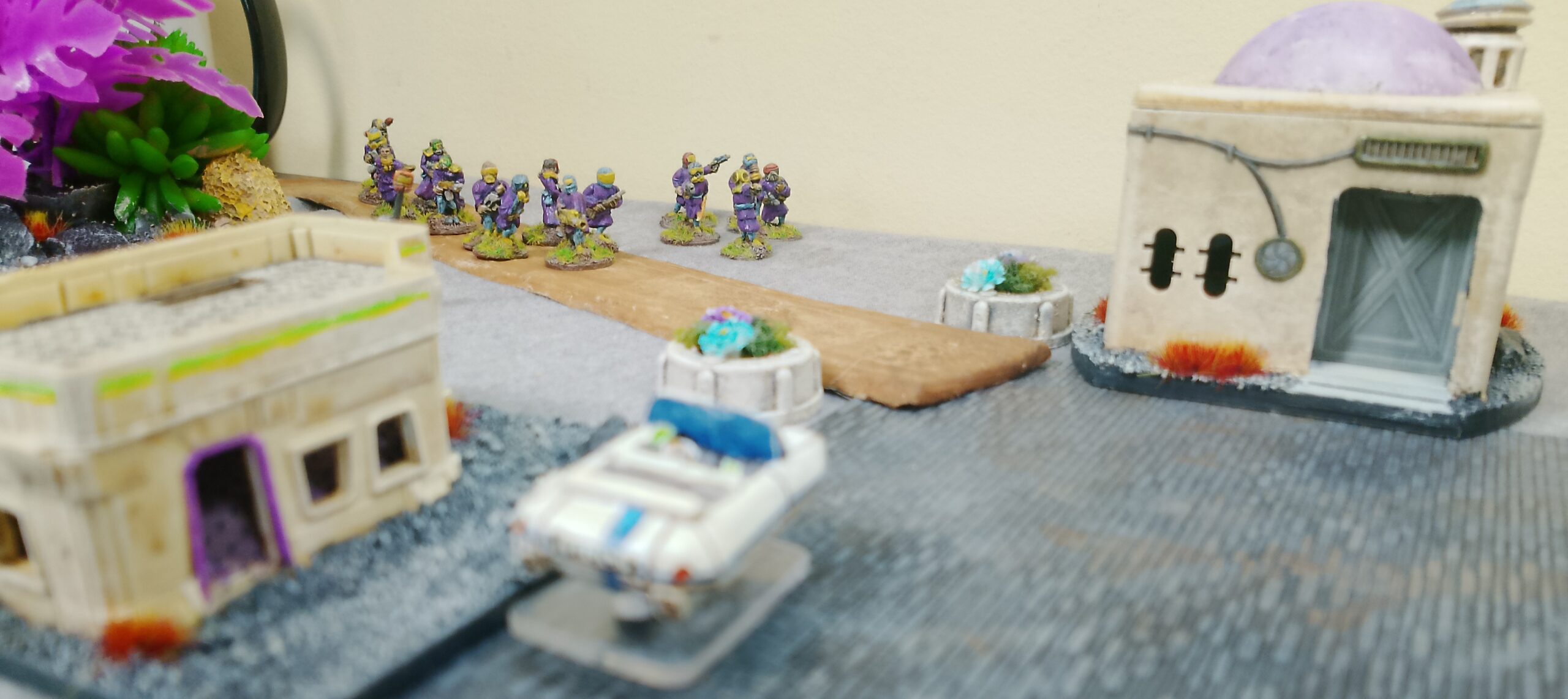
Okay, so now you know you’ve hit the thing your little dude was aiming at. The next question is, did you hurt him?
To find out you have to compare your weapons power level versus the kind of armor the target is wearing. Armor is pretty simple; none, light, heavy, and powered. The weapon power levels go beyond merely low, medium, and high, to include stunners and incendiaries. You cross index a chart, and roll a d6 with results generally being either a no-effect, near miss, or remove the figure from the table. As you’d expect, high-powered weapons do better against all kinds of armor, but even low powered weapons can have some effect against power armor, even if you need to dump a lot of lead at the guy in the hopes of scoring a “near miss”.
And “near miss” results are powerful in their own right. You can think of them as suppression, in that they force the target to hold position until the target’s next firing a phase is over. Given the turn order, that can neutralize a figure for a long amount of table time. For an expensive figure like a power armored infantry, that can be devastating, as it allows an opponent with a force of cheap lightly armored infantry for race around the board fulfilling their own victory objectives while your tanky boy ducks, and spins his wheels in the mud, completely unable to use all those wonderful guns bolted to his power armor. And given the simultaneous nature of shooting, this could mean two full cycles of shooting lost.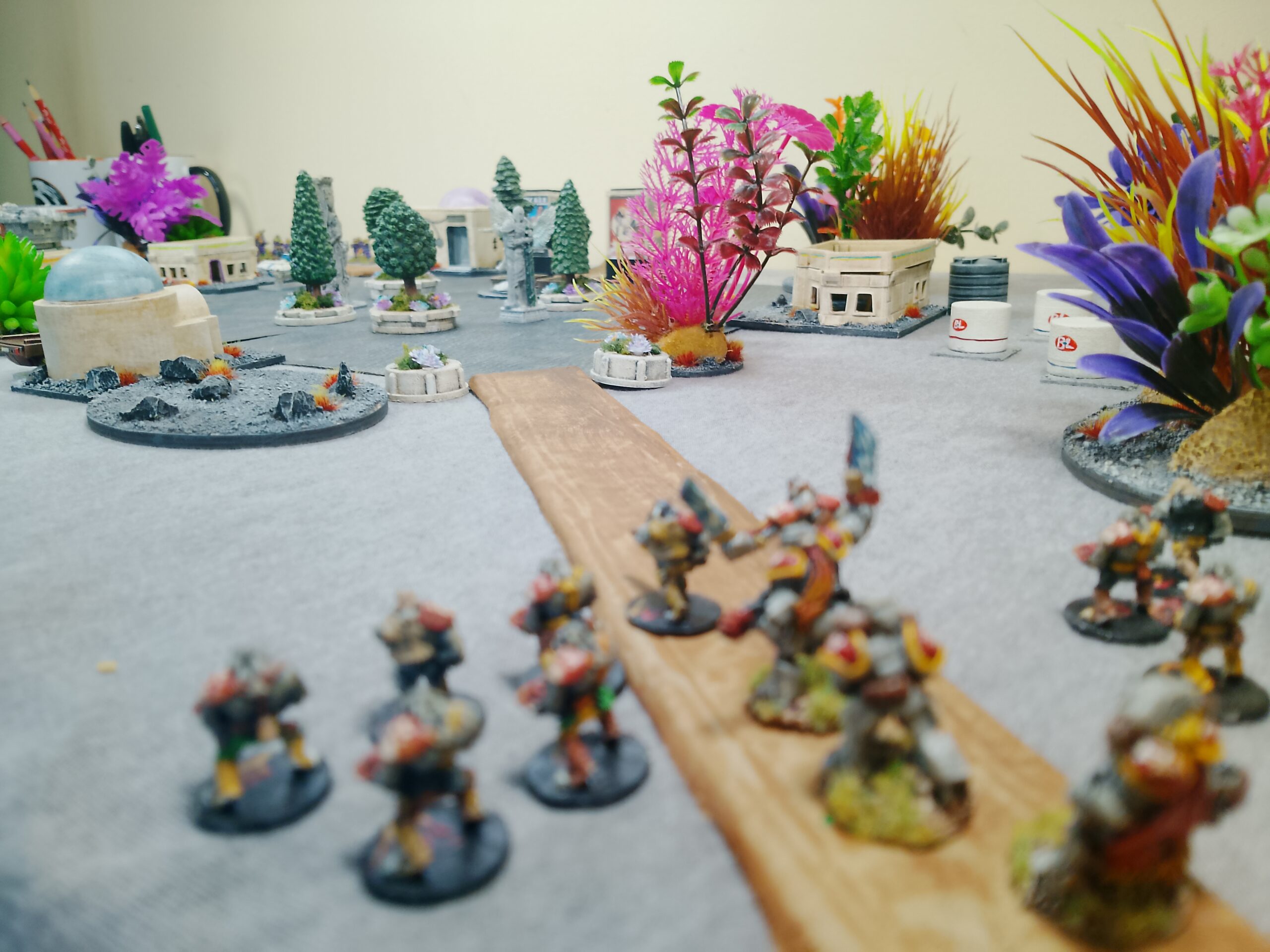
That is a very interesting game mechanic that opens up the potential for some very interesting tactical choices. It makes asymmetric fights between heavy tank infantry versus swarms of lightly armed troops viable. And that means you have incentive to come up with more interesting scenarios than just “kill them first”.
My games have been limited to 500 point battles, and you can set up and play them to completion in about an hour. That includes time to figure out the fiddly bits like weapon templates and vehicle rules. It’s a quicker game than it gets credit for, and that leaves one to wonder if this isn’t another example of conventional wisdom adopting 30 year old second-hand opinions rather than the voice of experience. It wouldn’t be the first time we’ve seen that phenomenon in this hobby.