
I went to an AD&D session and a game of Warhammer broke out! Sixth Edition, to be precise.
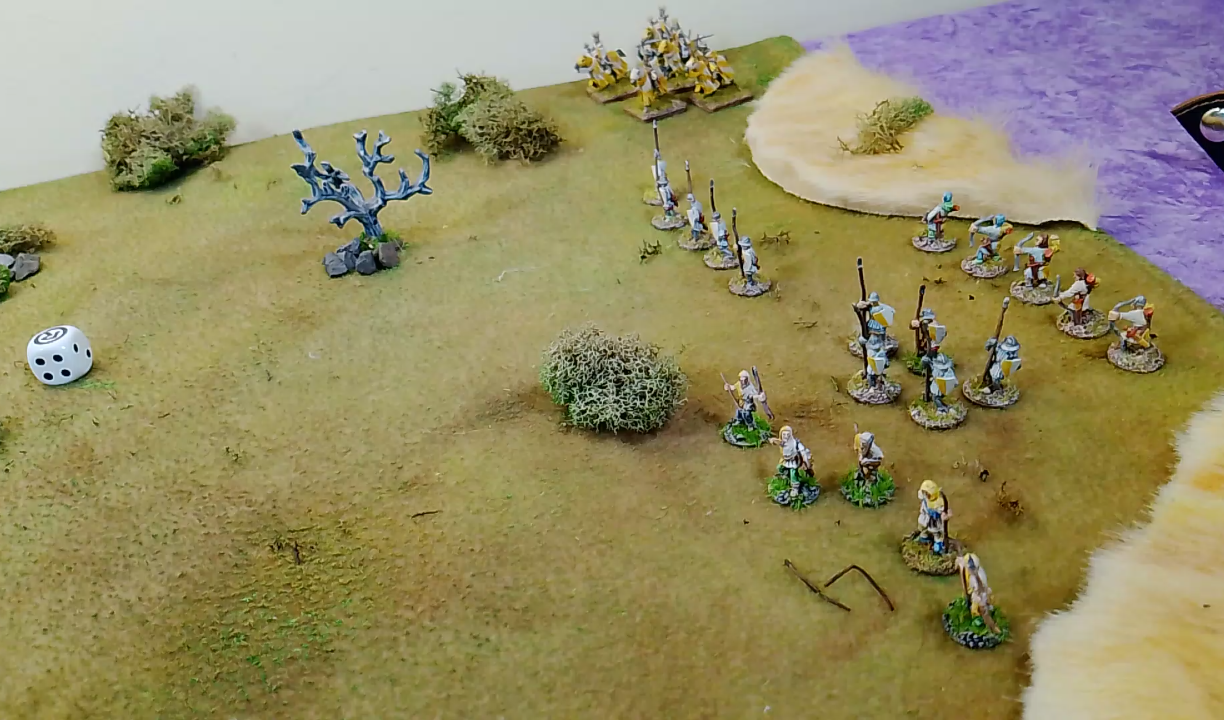
Sir Roger Steiner has been cleaning up the Wolflands, and by the time this post goes live will have wiped the evil off the map within a mile and a half radius of Castle Weasel. The last major confrontation, rolled up using the random encounter tables from the back of the dmg, of course, consisted of eight large and very poisonous spiders.
Since he had 50 men in the patrol, and each spider is something of a glass cannon, I opted to do something a little different. The AD&D combat system would have dumped everything on the table at once, and at a distance that would likely have put the spiders at a distinct disadvantage.
If they want initiative, their first move would be charging guys with spears. If they lost the initiative, then they’d stand around and wait for the guys with spears.
Since the campaign generated this as a hunt and destroy mission, it made sense to me to build out a hidden deployment scenario.
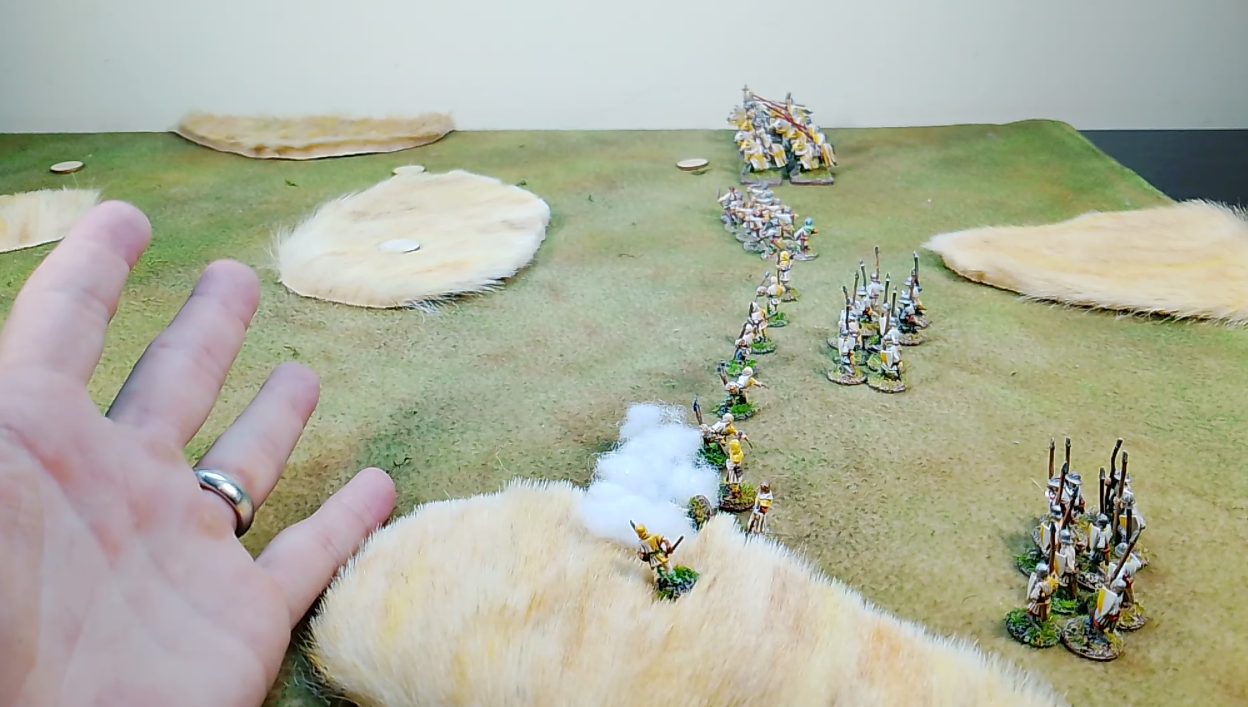
In terms of points value, the boys in gold and ivory have overwhelming force at their disposal. The spiders have those nasty webs, for area control, and they have poison for a whole lot of insta-kill. The only question was, how many men will they take with them?
The skirmish rules worked really well with peasants taking the role of light infantry and acting as a skirmish line. The cotton you see above are nests of webbing that slowed down the unit in the lower middle of the picture. Between the webs and the spiders ability to ignore heavy terrain, the humans couldn’t bring as much force to bear as they would have liked.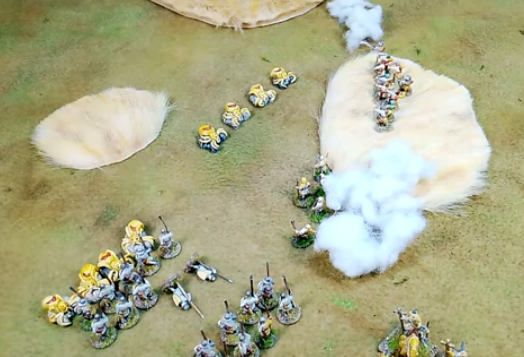
The game was a big success. It wasn’t clear at the outset how well these two rule sets would integrate. In retrospect one understands that these are two branches in the same family tree. A lot of modern games start from the game perspective, and they fall flat when you try to integrate them with a larger campaign. The granularity of the rules don’t work well with the sort of map-based and resource tracking campaigns that have fallen out of favor these days, but are still practiced in the House of Wargaming.
But both AD&D and Warhammer start* from the campaign perspective. Unlike games such as “Dragon Rampant” and “One Page Rules”, they aren’t calibrated for a fair fight. They aren’t built on very specific unit sizes to operate cleanly. That makes translation from the strategic to the tabletop so much easier with Warhammer and AD&D.
And one thing that I think goes unremarked is the fact that translation really focuses your attention on the details. It forces you to really think about who is on the table, what they want, and exactly what mechanics you need to really simulate the friction those variable generate.
Even if the translation isn’t necessary, it’s a very good exercise.
*Perhaps it’s more accurate to say “started”.