
 Chris Bahnweg, the author, sent me a review copy of this independent miniature wargame, and I so glad he did. It’s a bright little gem of a game that leans heavily into the aesthetics and flavor of ancient (and optionally mythically so) Greece.
Demigod doesn’t break a lot of new ground. It’s a mostly stat-line driven game built on opposed 3d6 rolls: combat vs. armor for melee, and combat vs. speed for missile. The difference in scores (minus an armor adjustment) is the damage dealt, with most figures featuring somewhere around 12-16 hit points. It’s got the usual equipment lists, and narrative campaign system built on an engine similar to that of OG Necromunda, which is a classic for a reason. Some magic weapons, short spell list, hired guns, and the bestiary round out the list.
Before we get to talking about the flavor of the game, let’s take a moment to think about what that 3d6 spread means. The system is very reminiscent of Joe McCullough’s Frostgrave/Shadowdeep core, but instead of the flat 1d20 probabilities, you get a nice juicy bell curve. This makes games of Demigod a lot more predictable, while allowing for those huge swings of fortune that generate moments at the table that feel…well, suitably epic. Figures will mostly see their hit points slowly chipped away until that moment when a big differential just wipes them out.
So now let’s talk about flavor, which is definitely this game’s strong suit.
Your warband will consist of a very few big dang heroes, a larger number of minor heroes, and as many spear carriers and support staff as you can afford. Turn order is alternating by class. Your major heroes will activate, and then my major heroes will activate. We alternate minor heroes, and finally alternate the lowest class of figures, which the game calls Minions. In addition to the obvious attribute buffs available to the heroes, the two classes of hero have different options for the gods to whom they’ve dedicated their lives, and those options will drive the game.
Major heroes get to choose from the big three: Zeus, Poseidon, and Hades. Each of these three gods will provide stat boosts, equipment, and magical abilities called boons. You can think of boons as magic spells, something akin to clerical magic in other fantasy games. Minor heroes choose from the rest of the pantheon, with each God or goddess granting gear and power-ups of their own, though minor heroes don’t receive the Big Whammies. For example, and to no one’s surprise, choosing Ares gets your boy a combat boost and choosing Hermes gets him a movement bonus. It’s a great little system that does double duty as both background and mechanics.
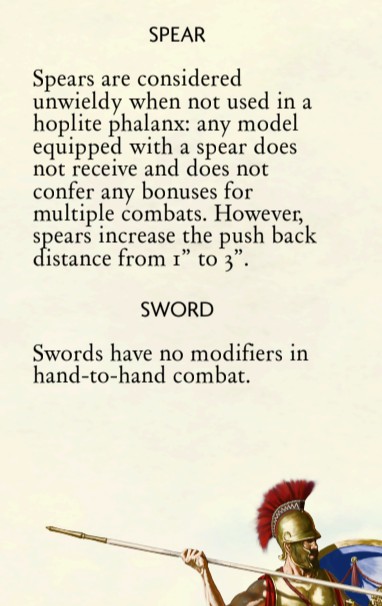 You seen all the weapons included in this game, but attention has been spared to motivate players to use them in a setting appropriate manner. You don’t have eight different kinds of swords, and you don’t have 32 different kinds of pole arms. Instead, you get the kings of the battlefield, The Sword and The Spear.
The same is true of the creatures in the bestiary, who hit the highlights of the Homeric tales. You get the minotaur, the medusa, and the harpies, plus a few others. It should be easy enough to throw in whatever creatures you think the author’s missed. And the six monster hunting scenarios working some special rules to to really help sell the atmosphere.
It’s a tight little system. It’s familiar enough to feel as comfortable as an old blanket. But the attention to detail, and the historical research that went into this game make it a welcome addition to my library shelf. And it gives me an excuse to whip out some new additions to the terrain box.
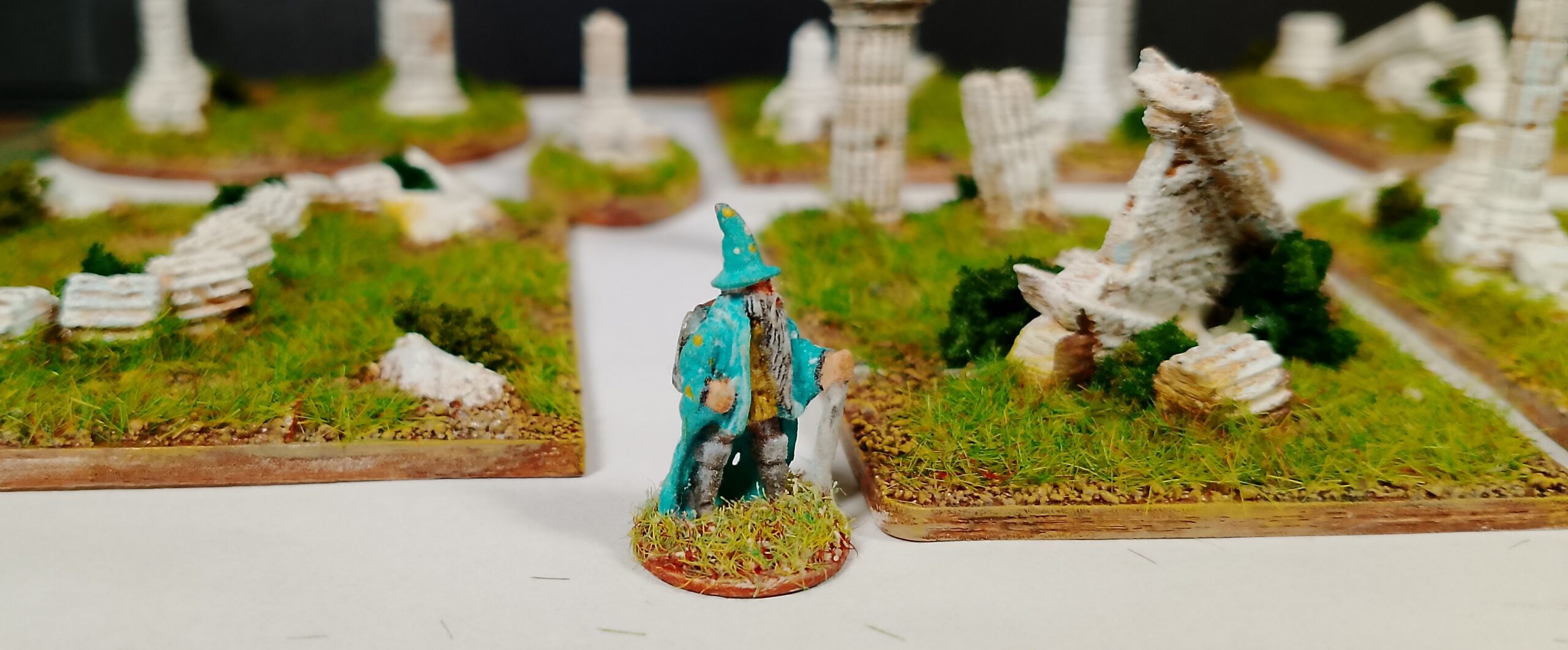
Now if only I had a way to paint these Demigod figures…
to be continued!