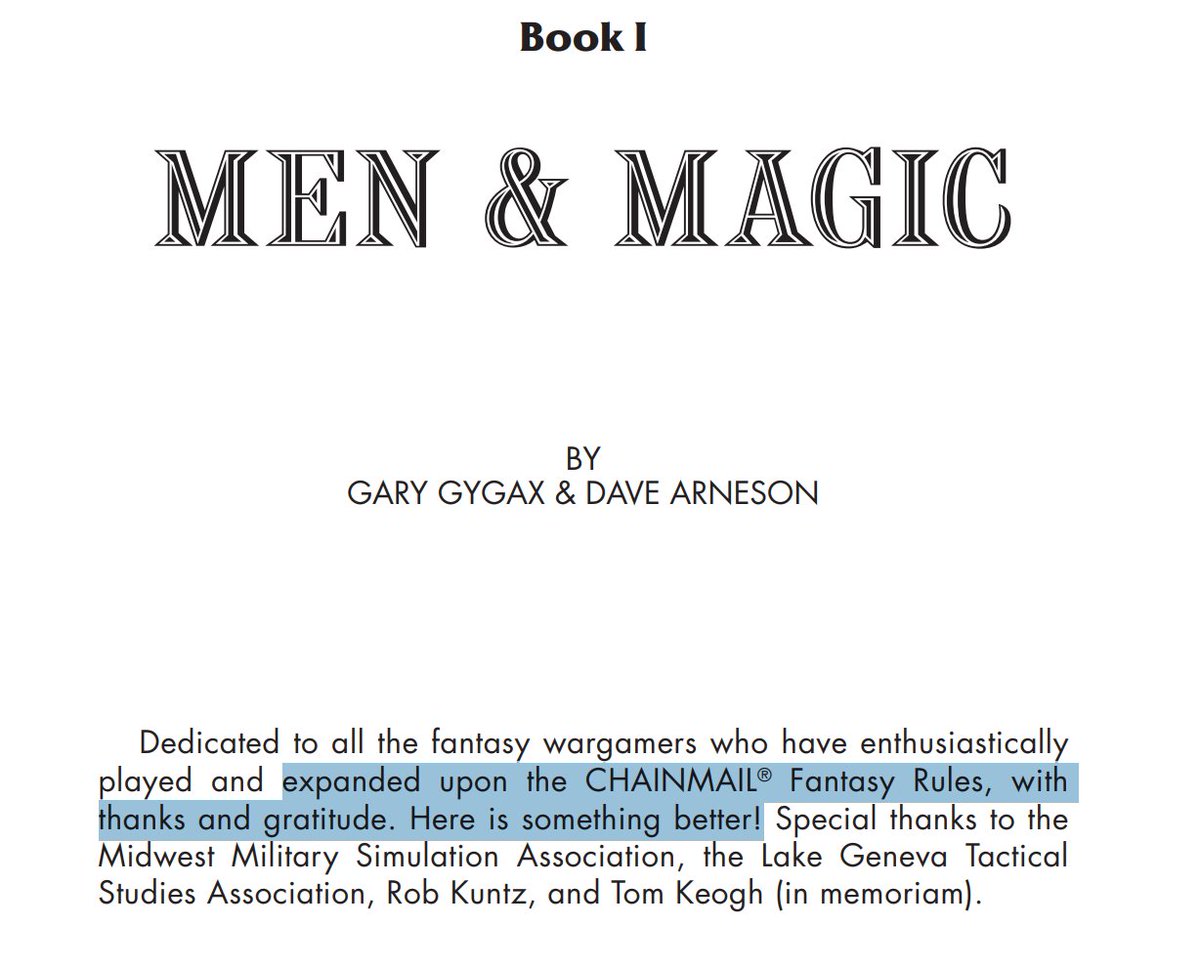
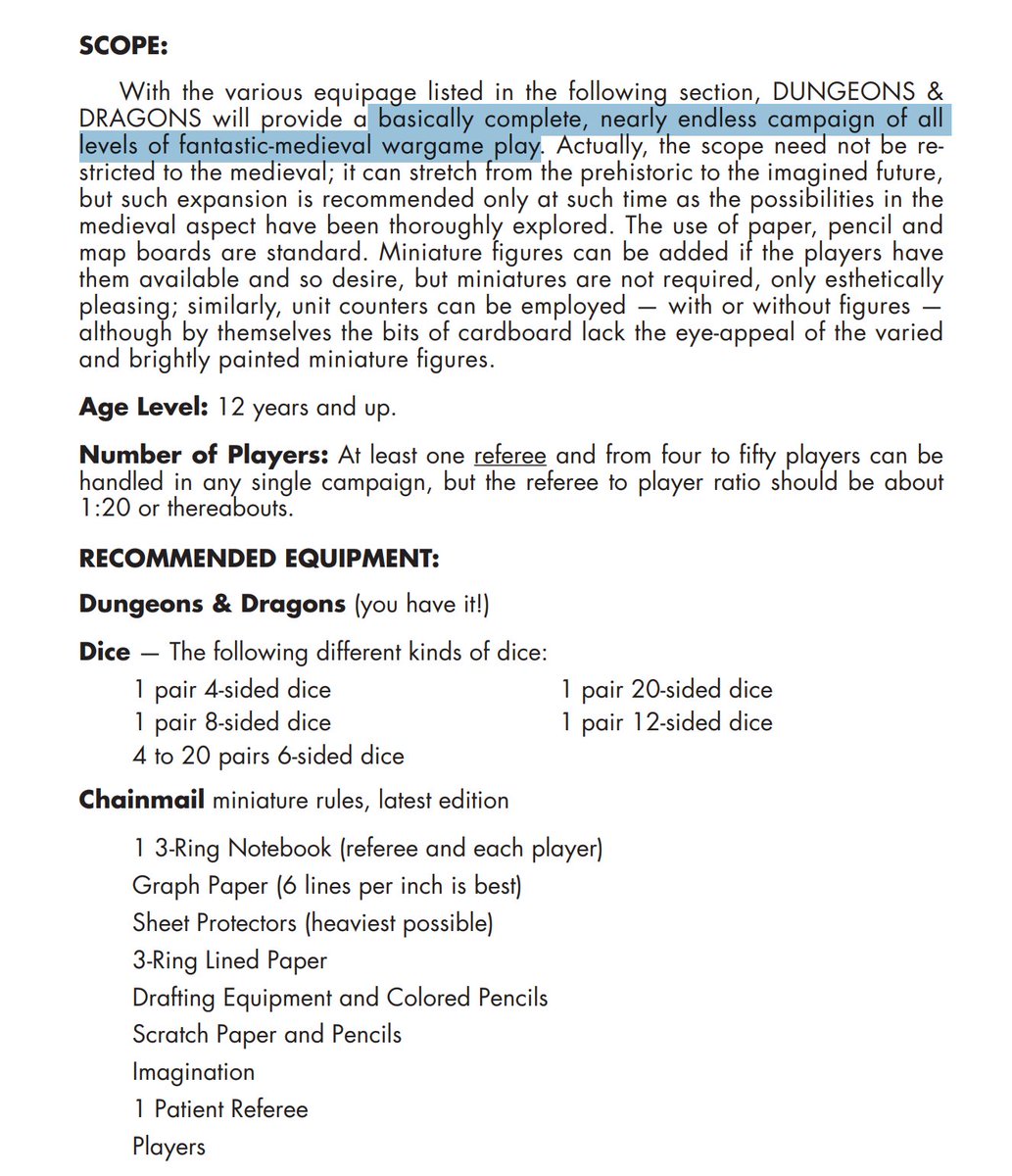
You can’t play OD&D without CHAINMAIL. To put it in other way, if you’re not using CHAINMAIL, you’re not playing OD&D.
And now, thanks to AlchemicRaker, we finally have all the receipts gathered in one place. Thanks to modern social media technology, I have either shamelessly stolen or selflessly preserved here for posterity, depending on how generous your spirit is.
Frankly, the only thing I can add here is the obvious conclusion that Raker is the foremost leading authority on CHAINMAIL. There isn’t anyone in the hobby who understands the details and practical application of the rules like him, and who has the dedication and writing ability to reach those of us who want a better appreciation of the game.
 For decades CHAINMAIL was a mysteriously complex and just out of reach experience for most hobbyists. Analysis was limited to a few out of context passages lightly analyzed using a modern RPG lens by poindexters more interested in burnishing their credentials as an OSR historian. Today, we have an actual practitioner of the game with a complete understanding, not of the words, but how those words translate to the table, to the experience of playing the game.
We are fortunate to live in such times, and to finally comsign the dark ages of the cargo cult OSR to the dustbin of unplayed history.
What follows is entirely his work, and I take no credit for any of it.
The prevailing belief is that the ACS included in OD&D replaces Chainmail
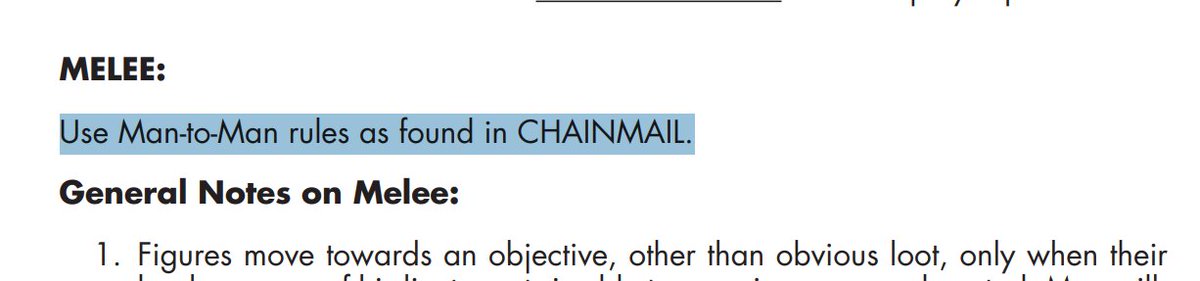
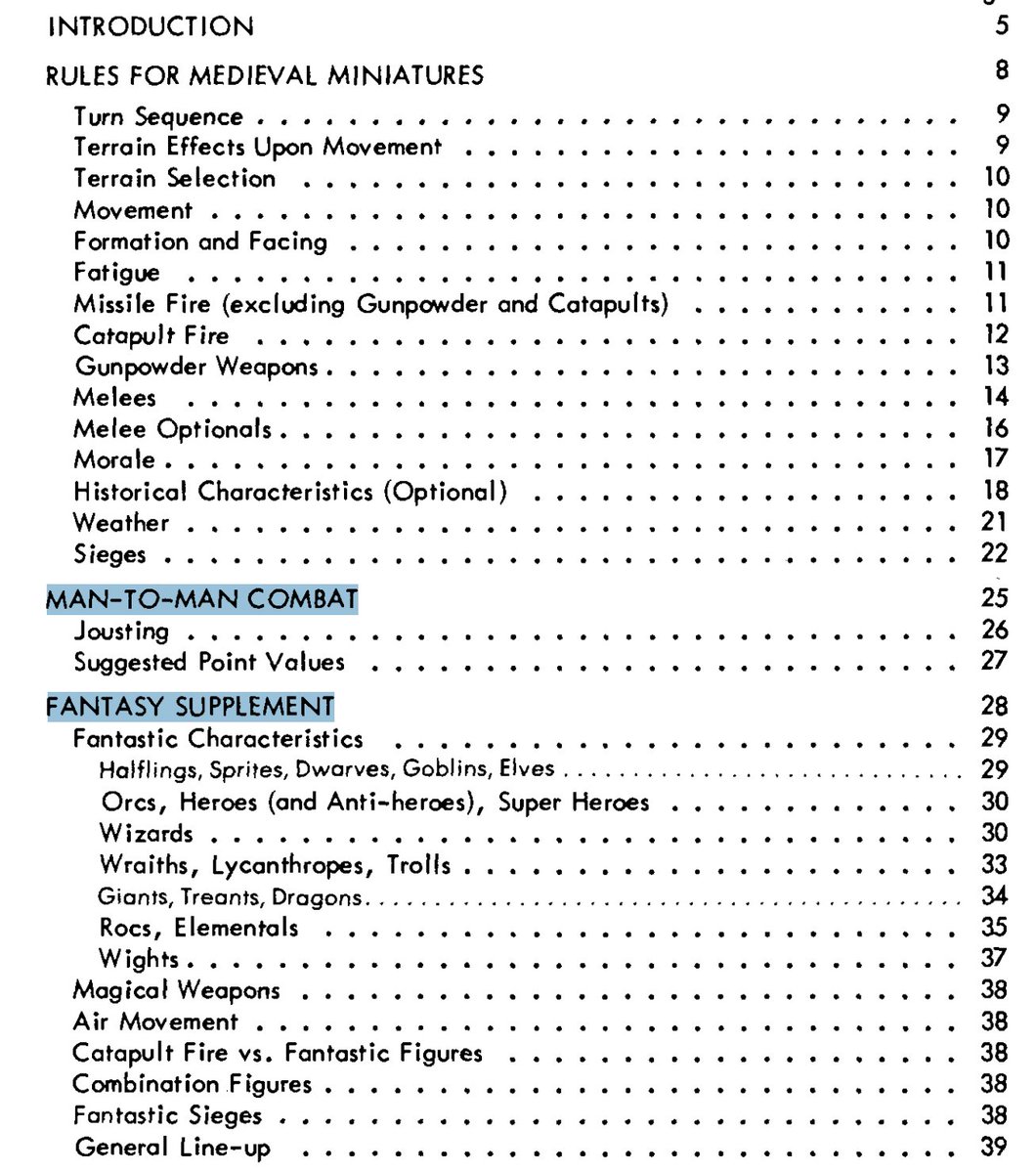
What is missed is that the “normal” combat system in Chainmail is its Mass Combat, while the derived systems are given clear titles like “Man to Man”.

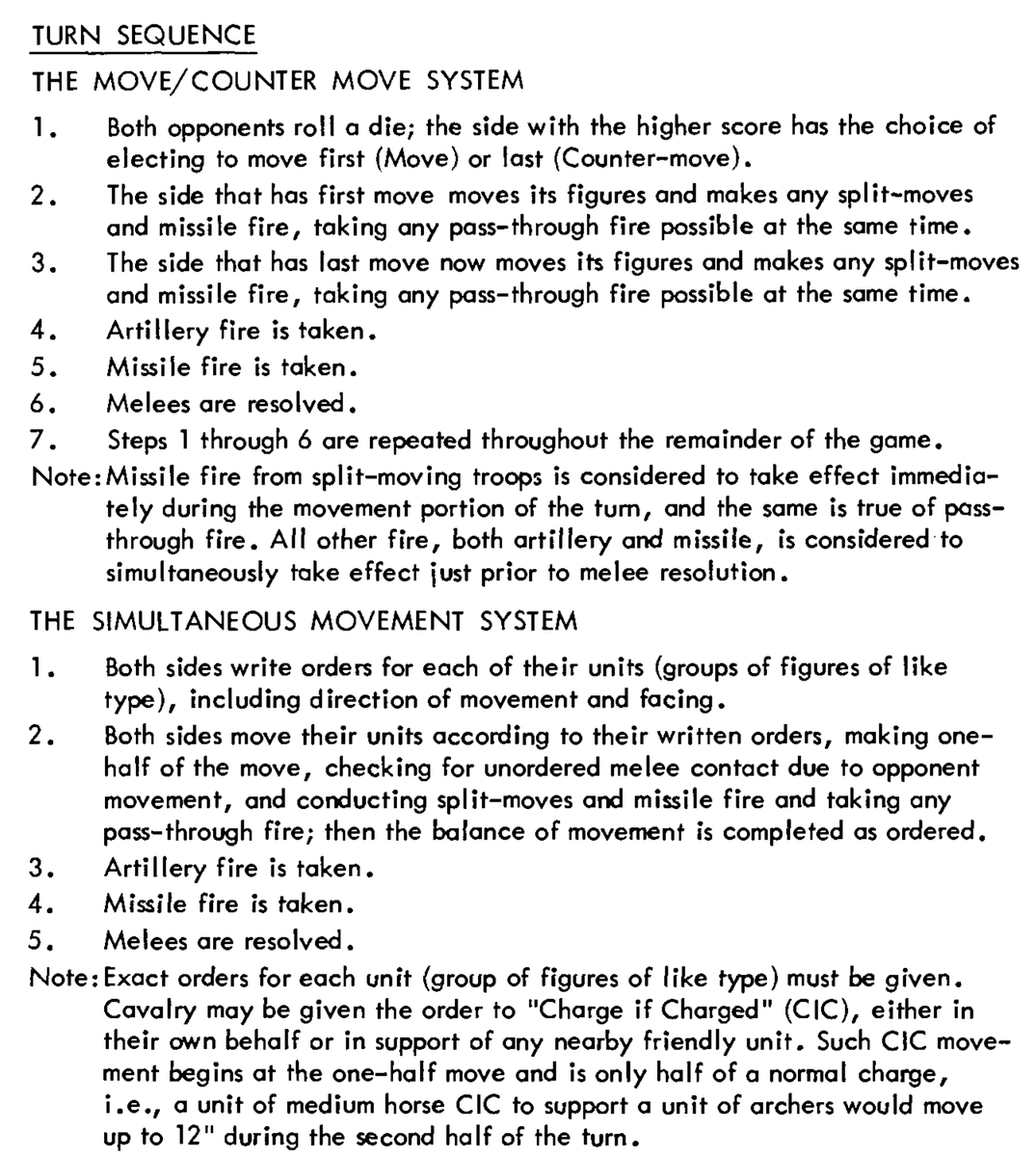
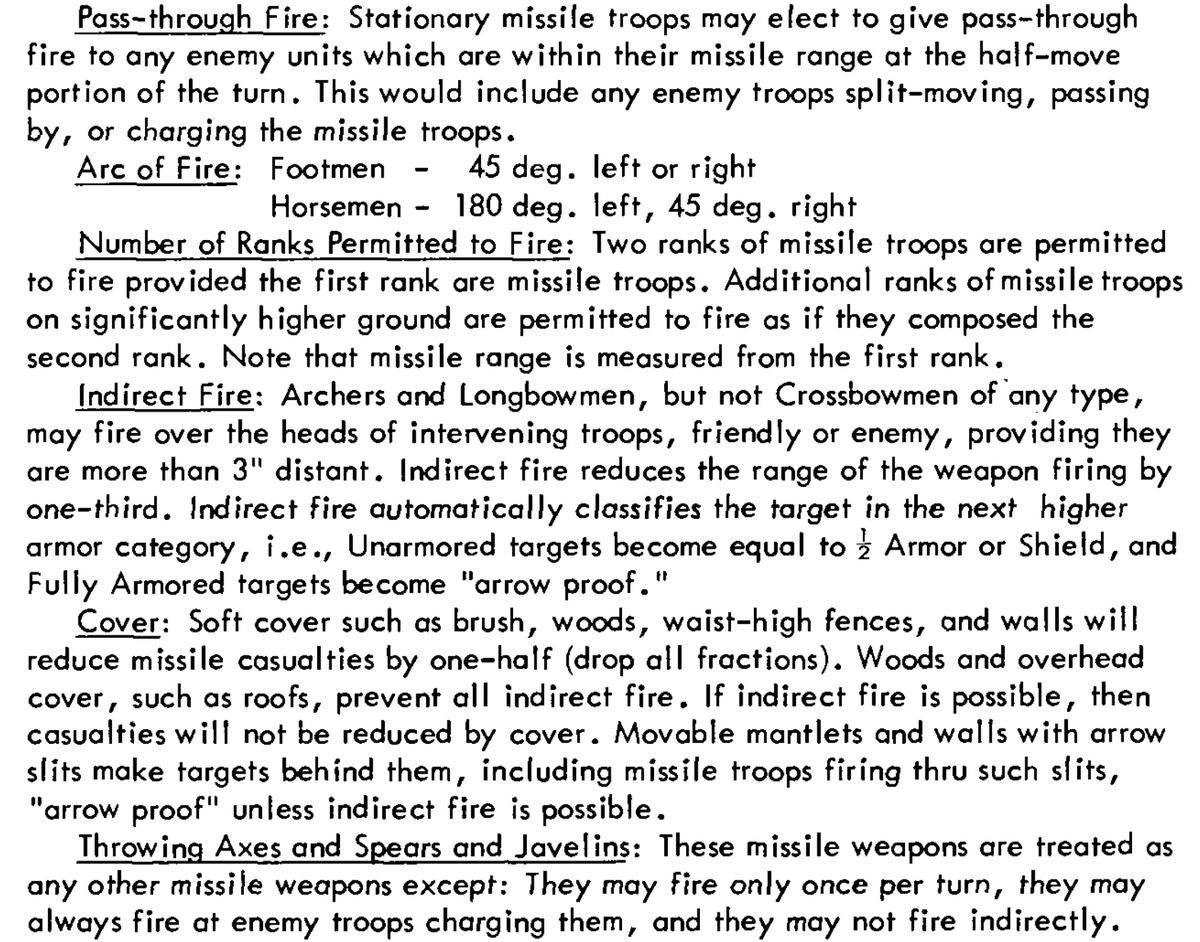
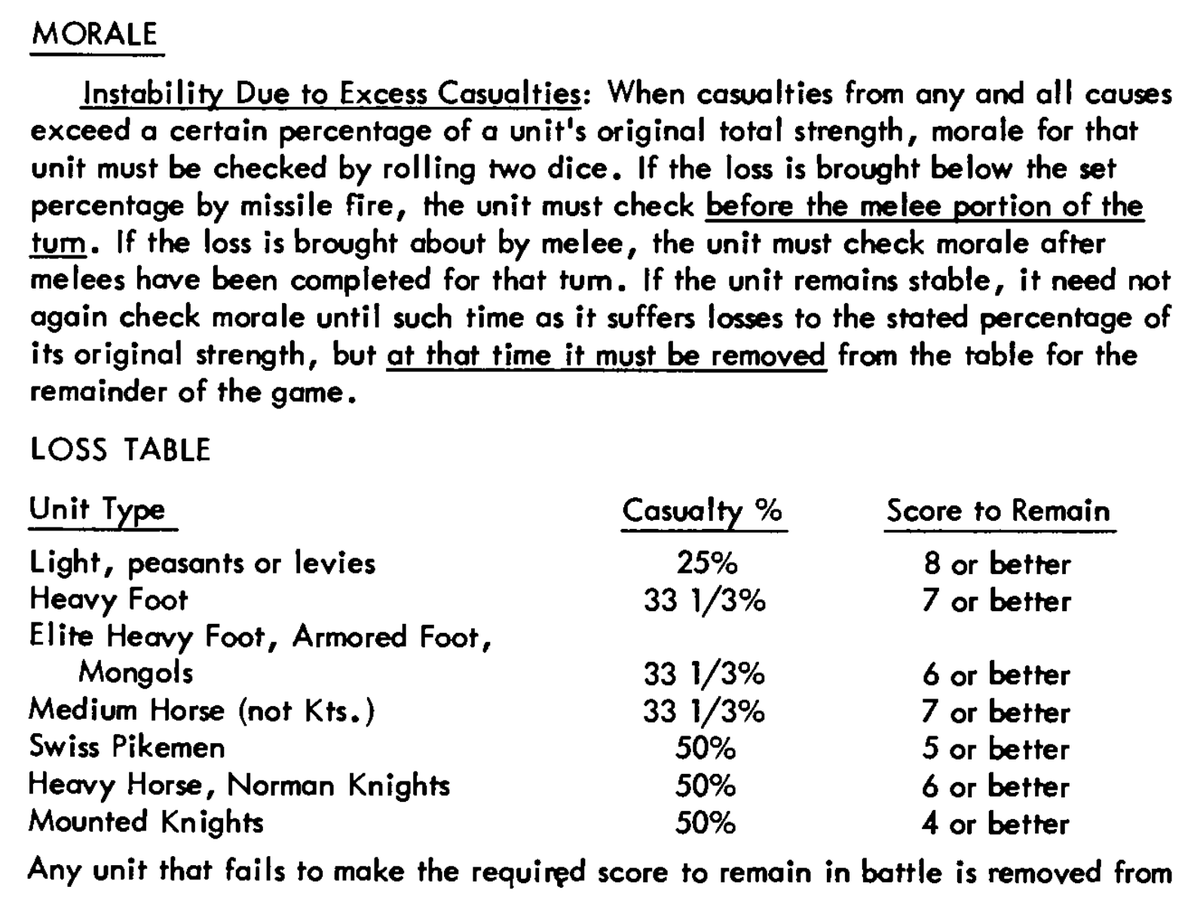
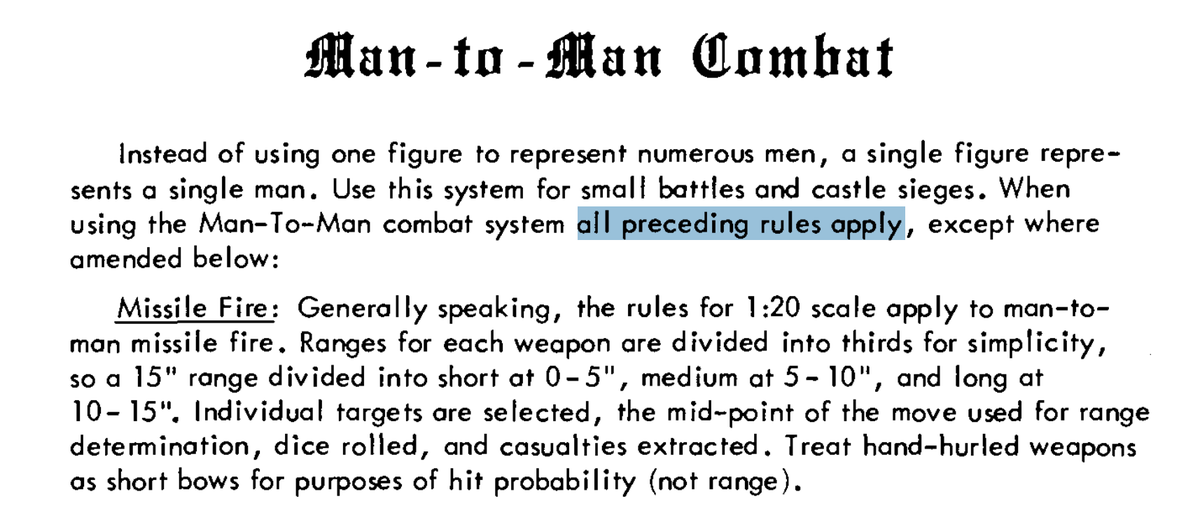
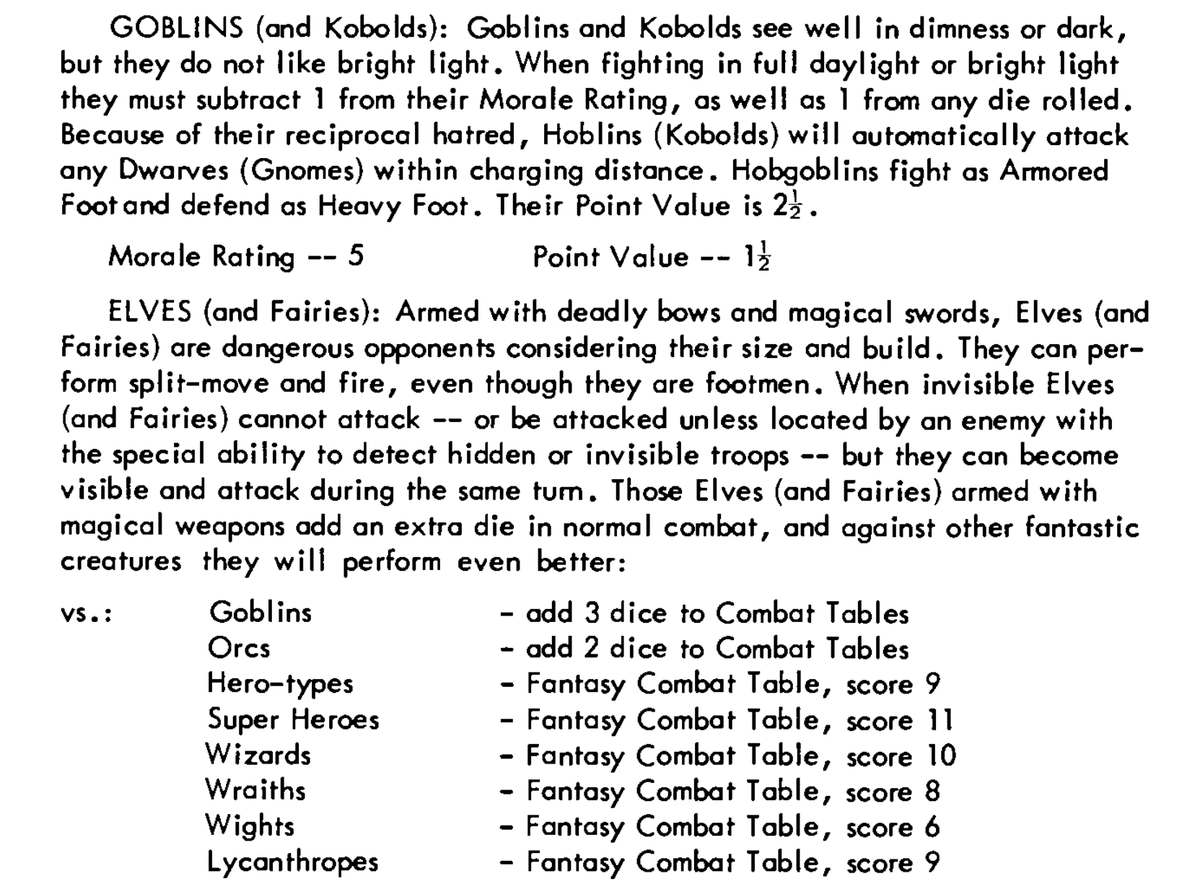
Note Elves utilizing (normal) “Combat Tables” for 1:20 troop combat, and the Fantasy Combat Table for Heroic-tier 1:1 matchups.


This assigns numbers to Chainmail’s Armor categories, giving each one a numeric AC to be used for Fantasy Creatures.
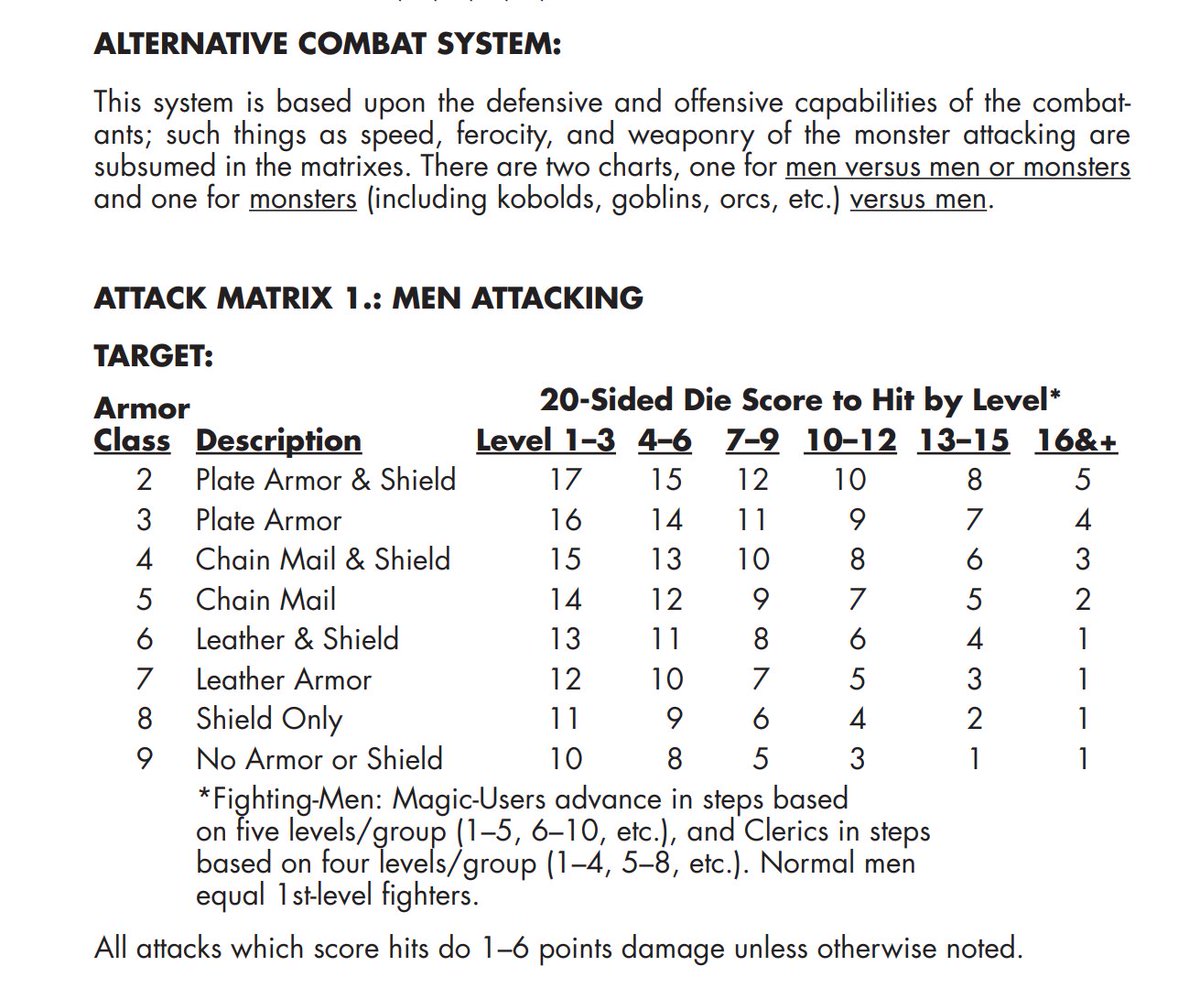


And without Chainmail …??? No indication.
But let’s look at what Chainmail says about horses attacking.
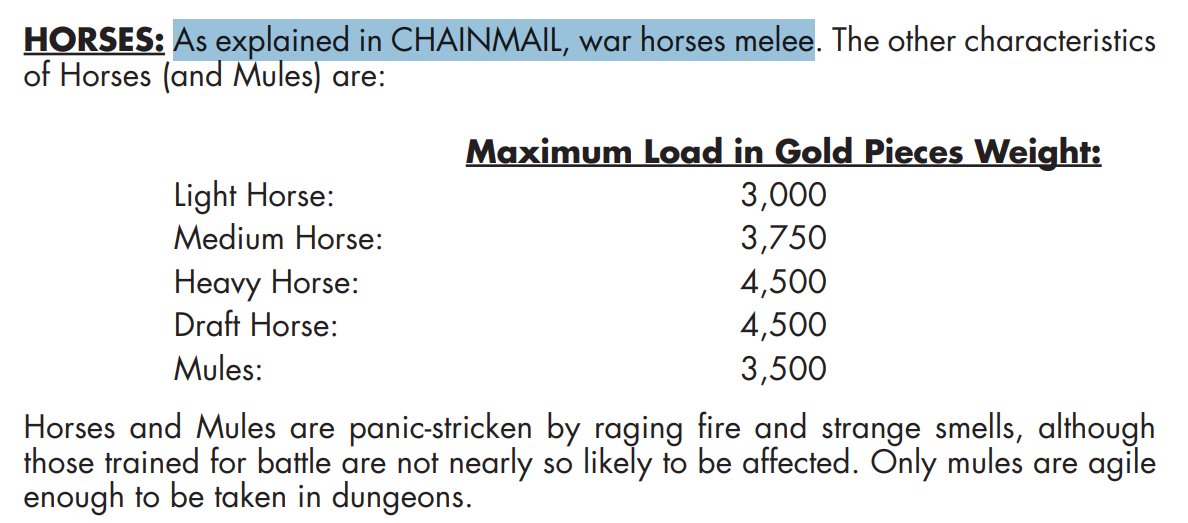
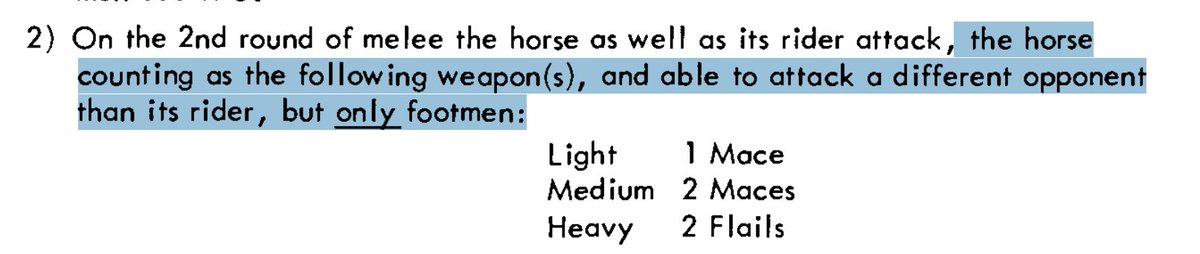
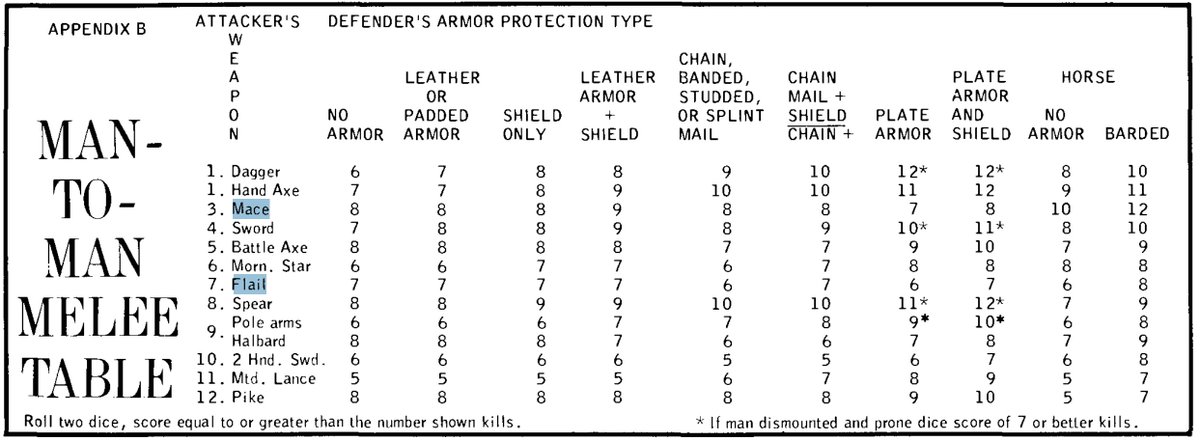
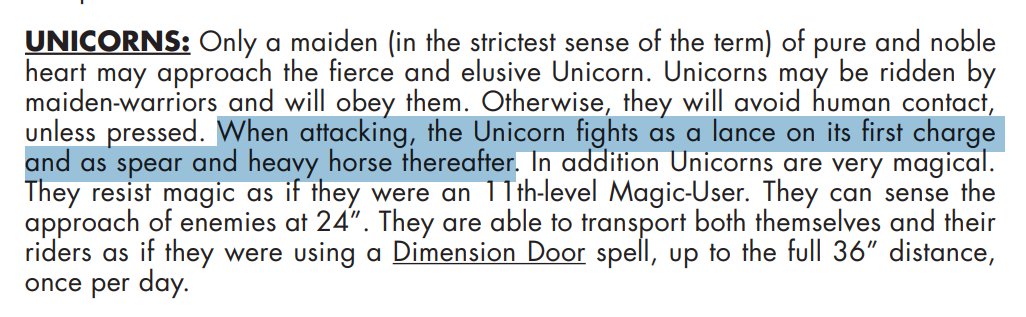
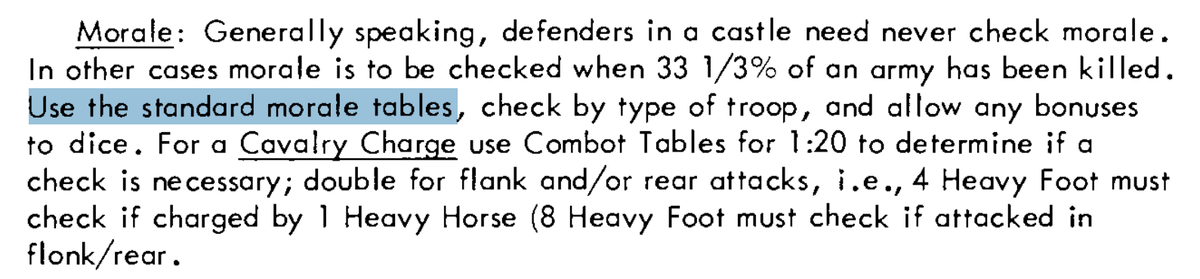
Larger battles can be fought at 1:20 ratio (normal Chainmail), with some additional considerations for 1:1 figures.

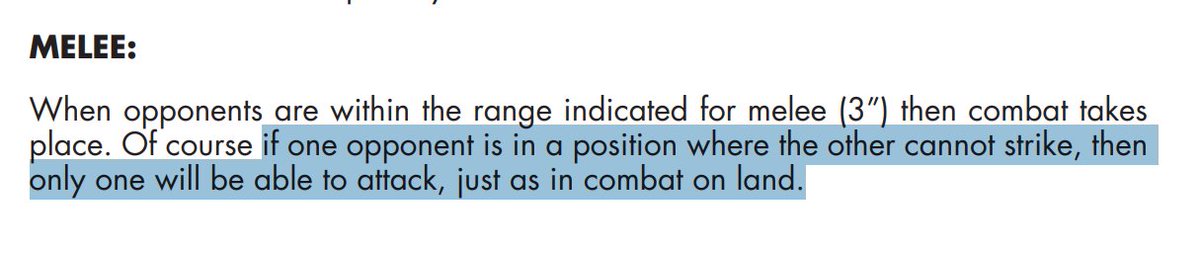

In Naval Combat, the Melee from Boarding procedures straight up uses the Man to Man rules.
Because ship crews are not going to be using heroic/fantasy combat, obviously.
The ACS from OD&D Book I is also NOT referenced here, for the exact same reason.