

For a hobby that has existed for half a century, the discovery – or invention – of a genuinely new role at the table is a rare and meaningful event. Dungeons & Dragons has been played, studied, dissected, theorized about, experimented on, and reinvented for fifty years. Its rules have been rewritten, its editions debated, its tables bent, broken, borked, and house‑ruled beyond recognition, and people paying the most ersatz version of the game still insist on called it D&D for some reason. Through all of that, one (wrong) assumption remained pretty much universal: the Dungeon Master is the singular authority who runs the world, adjudicates the rules, and manages the campaign. The idea that this monolithic role could be split, reframed, or reimagined has rarely been explored in any formal way. Sometimes the role rotated and sometimes it was dispensed with altogether, but always the dichotomy of DM and player remained. You were either behind the DM screen, or you weren’t.
That is why BDubs’s articulation of an entirely new position in the game, the Booker, is such a striking development.
The Booker is not simply another DM, nor a new kind of character (like a faction). It is instead a distinct third role: the campaign showrunner, the person who manages continuity, factions, calendars, logistics, and the connective tissue of a living world. In BDubs’s model, the Booker is responsible for the world, while individual DMs are responsible for sessions. This separation of duties is subtle but profound. It acknowledges that large, multi‑tiered campaigns – the kinds filled with newly recovered archaeotech like Braunsteins, downtime scheming, and third party battle resolution – require coordination beyond what a single session referee can reasonably provide. The Booker breaks the GM-Player divide and straddles the DM screen to become steward of the campaign’s long‑term coherence.
What makes this remarkable is not just the idea itself, but the fact that it has never been formally articulated before, despite being part of the game since it’s inception. If you squint a little you can see that early D&D pioneers like Arneson, Gygax, Bledsaw, and Barker often acted like Bookers, but they never named the role nor codified its responsibilities. Their campaigns were sprawling, improvisational, and often chaotic, but the division between world‑runner and session‑runner remained implicit. They only thought in terms of loaning the DM’s authority for a brief time. BDubs’s contribution is to make that implicit structure explicit – to define the job, describe its duties, and show how it solves problems that have plagued large campaigns for decades.
Reading his blog over the years one can see that this discovery emerged from practical experience and actual play. In BDubs’s UMBROS campaign, multiple DMs have run different tiers of play: adventure sessions, Braunstein diplomacy, and downtime. The campaign faltered when these DMs failed to run their tiers consistently, revealing a structural weakness. The megadungeon suffered from inaccessible early levels. Faction play stalled without regular meetings. Downtime became chaotic. The lesson was clear: a large campaign needs a central coordinator. UMBROS needed a hype man.
Comes the time, comes The Booker.
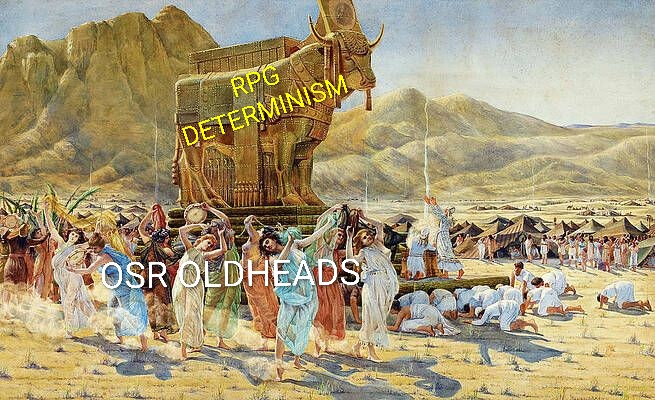
Equally important is what the Booker implies about early D&D itself. It suggests that the hobby’s origins were not a single unified tradition but a bricolage of house rules, wargame habits, contradictions, and emergent playstyles. This challenges the tidy narratives some self‑appointed experts have constructed over the years. A lot of OSR purists have spent decades reconstructing early D&D as a coherent doctrine, loudly proclaiming “no one ever played that way” while relying on vague forum recollections and selectively remembered anecdotes. They view the hobby as it is as how they hobby had to be, and cling to the notion that it’s current gormless structure is an inevitable conclusion of historical determinism.
The Booker role exposes the limits of that approach. It reveals that early D&D was more complex, more varied, and more structurally interesting than the orthodox narrative allows.
In that sense, the invention of the Booker is not just a design innovation – it is a historical correction. It acknowledges that the hobby’s past contains overlooked patterns and unarticulated structures. It invites players and DMs to revisit the origins of D&D with fresh eyes, recognizing that even after fifty years, there are still discoveries to be made.
Which would explain why the oldheads in the hobby work so diligently to ignore this stunning discovery/revelation. It power word kills one of our PG’s sacred cows, and pulls back the curtain to reveal that the great and terrible wizards of the hobby are small and petty men distracting the mob with smoke and illusion. After all these years there’s a whole new dimension of the game to explore and adventures to be had, but the OSR keepers of the lore refuse to leave sight of the shore and if too many brave souls set off to discover new worlds of gaming they will surely be left behind.
It’s an odd thing for players of games about discovery to be so scare to leave the safe harbor of fifty years of the same-same, but YOU don’t have to stand athwart gaming history yelling STOP! You can still find new lands of adventure now that BDubs has given you both the map and the key.
What a wonderful gift to the hobby.
We don’t deserve BDubs.