

Miniature wargaming finds itself in a parallel position to the TTRPG hobby. That’s not too surprising given that they are two sides of the same coin. On the one hand, designers and players are clearly hungry for persistent worlds, faction autonomy, and long‑form narrative play. You can see the desire everywhere: Crusade systems, Paths to Glory, map campaigns, sector wars, narrative leagues, and all the other half‑measures that slouch toward a living world without ever fully committing to one. The instinct is correct, but it is hampered by momentum and an inability to think outside of the commercial box.
The problem her is that attempts to innovate anymore compelling campaign system are built on the chassis of 1970s communication technology. Here in our advanced modern age we have the ability to game with hundreds of players spread across all seven continents. And yet the games we play are still tied to meat space and the table top.
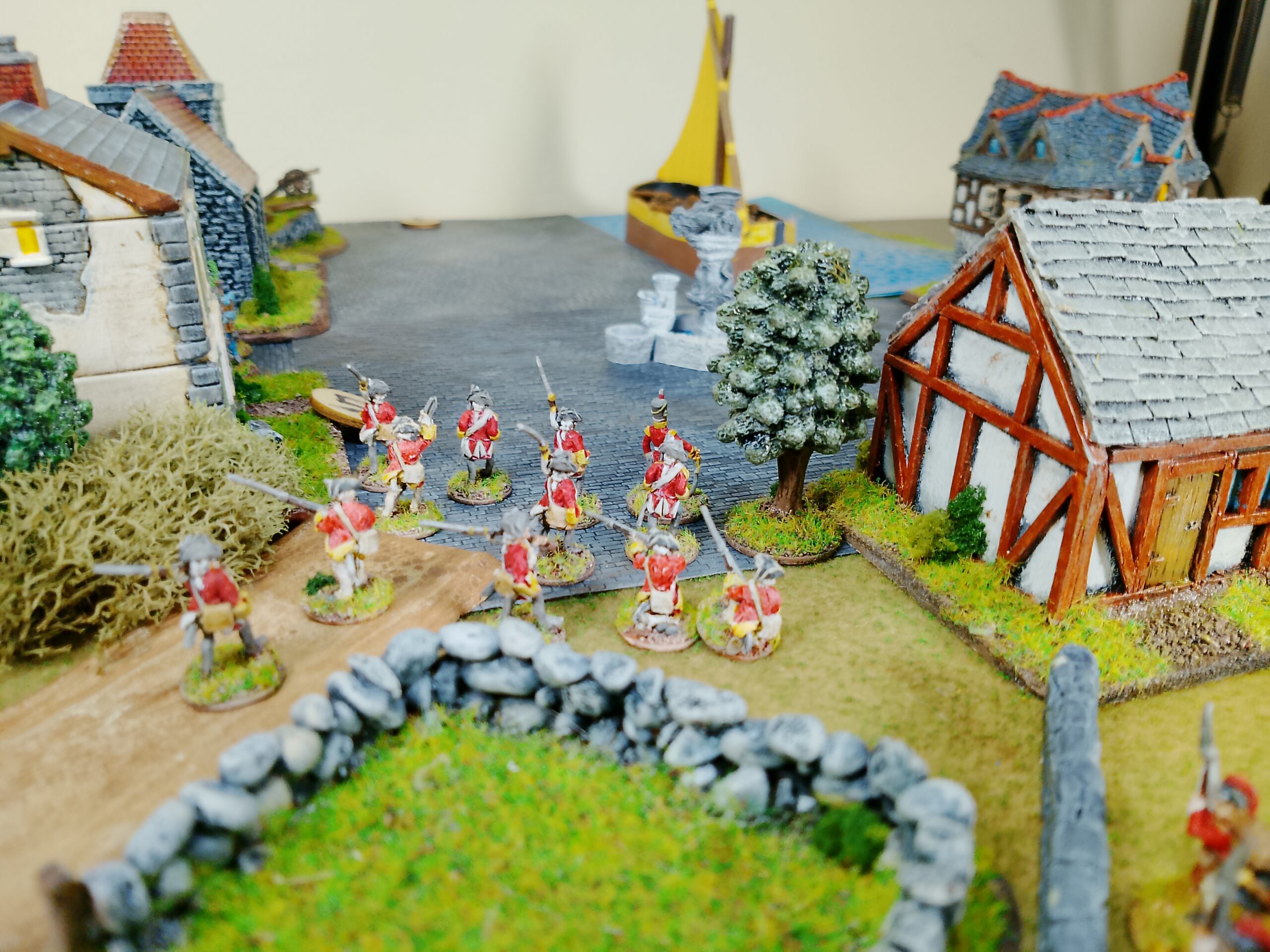
Campaign games so heavily tied to the physical world simply don’t scale beyond a handful of players, and attempts to do so make the whole structure collapse. Instead of srepping back and taking a fresh look to solve the problem, the rule merchants sidestep it. Their “solution” becomes the same every time:
Stop running campaigns.
Just run a tournament.
This is the great irony of modern wargaming. The hobby is flirting with the very ideas that made early campaign play so compelling – persistence, politics, logistics, imperfect information – yet its only widely adopted method of handling large player counts is to abandon campaigns altogether and retreat into the sterile safety of tournament culture.
Why? Because tournaments scale. Campaigns, under the old model, do not.
Or at least, they didn’t use to.
Traditional wargame campaigns suffer from the same structural weaknesses that plagued early post-Braunstein RPGs. They depend on a single organizer to track the map, adjudicate movement, schedule battles, manage logistics, and keep twenty different players informed and engaged. The moment that organizer falters, the campaign collapses. Add in the difficulty of coordinating schedules, the fragility of faction balance, and the inevitable player attrition, wargame rules that don’t scale from duels up through armies, and you have a structure that simply cannot support more than a small group.
Tournaments, by contrast, are robust. They require no persistence, no diplomacy, no logistics, no politics, no continuity. They flatten faction identity into a list of point‑balanced units. They eliminate the fog of war. They balance force sizes. They reduce the game to a series of isolated, symmetrical battles. They are easy to run, easy to monetize, and easy to package. In other words, tournaments are the anti‑campaign. Which is is precisely why they became the default.
But this retreat into tournament culture has come at a cost. It has trained an entire generation of wargamers to think of the hobby primarily as a competitive exercise rather than a world‑building one. It has conditioned players to expect balance instead of consequence, symmetry instead of strategy, and curated matchups instead of emergent conflict. It has replaced faction identity with army lists, and strategic decision‑making with optimized builds.
Meanwhile, the hobby is experimenting with the very things tournaments erase. Players are running persistent rosters, tracking battle scars, negotiating alliances, and maneuvering armies across digital maps. They are rediscovering the pleasures of imperfect information and faction politics. They are building the beginnings of living worlds.
But only in small drinks and drabs.
Oathmark, for example, is built around the idea that your army exists inside a living kingdom that grows, changes, and suffers consequences over time. It wants to be a persistent-world, many-to-many campaign game. It has the DNA, the (admittedly abstracted) map, faction autonomy, and the emergent world state. But it still assumes low player count, limited diplomacy, one-to-many ref-to-player ratios, and a player count fragility.
It’s a perfect example of the modern wargame problem: Designers are experimenting with persistent worlds, but the only scalable structure the hobby actually uses is the tournament.
This is the exact opposite of what should be happening. The tools now exist to scale campaigns in ways earlier generations could only dream about. Discord, shared documents, automated map trackers, and asynchronous communication have removed the old bottlenecks. The hobby no longer needs to choose between a four‑player campaign and a forty‑player tournament.
What it needs is a new set of scalable campaign procedures – the wargaming equivalent of Braunstein’s many‑to‑many structure – that allow dozens of players to participate in a persistent world without collapsing the system.
Luckily, those procedures already exist, and they even serve as a sort of Rosetta stone that allow multiple rulesets to be used to adjudicate conflict within the same persistent campaign.
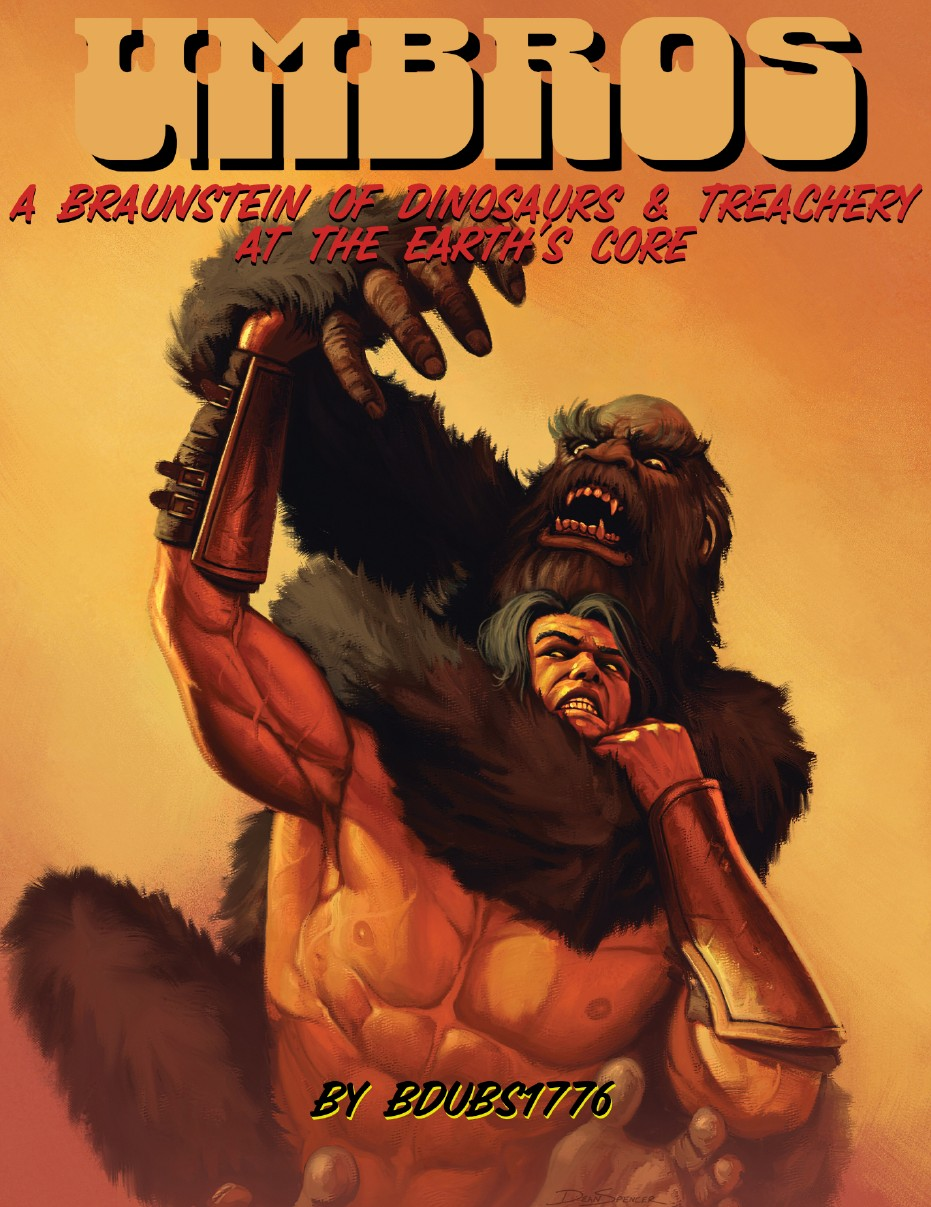
Not only do they exist, they always have. It’s just that miniature wargamers see the value that Braunstein techniques could bring to the miniature wargaming table. Or perhaps it’s just that the commercial side of the hobby couldn’t find a way to monetize that value. At least until Gary Gygax backed his way into the lucrative theater kids market. At which point the lead-pushers turned away from the processes that they now struggle to rediscover.
Or perhaps miniature wargamers like the idea of playing in a long-running, large-scale, persistent campaign far more than actually doing it. To really play the kind of campaign that Oathmark and others are chasing would mean abandoning decades of traditional play and bolting on a more role-playing game experience as a driver of scenarios. That’s a pretty heavy lift, and until some clever lad in the indie scene discovers titles like BROZER and UMBROS, re-skins them, puts them in a box with a price tag, then finally invests the time and energy necessary to sell them to the broader wargaming community, it just ain’t going to happen.
Miniature wargamers are people, and people are social animals, and they rely heavily on social cues and sticking to the herd. They go where they are lead. (And before you even think it – don’t look at me. This is a tinker’s blog, not a vending machine.) Right now, the influencers and leaders and industry types are perfectly content to repackage and resell the same mechanics with the same promises to perpetually restless market.
But the tools are out there. And someday they’ll be used to make miniature wargaming campaigns great again.